

Marktverlangsamung verändert die Elektrifizierungsstrategie
Die weltweite Nachfrage nach Elektrofahrzeugen wächst weiterhin, jedoch langsamer als ursprünglich prognostiziert. In wichtigen Märkten wie Europa, China und den USA passen Hersteller ihre Strategien zunehmend an. Statt ausschließlich auf vollelektrische Modelle zu setzen, gewinnen Plug-in-Hybride (PHEV) wieder an Bedeutung, da sie eine Brücke zwischen klassischen Antrieben und reinen Elektrofahrzeugen darstellen.
Vor diesem Hintergrund zeigt sich ein deutlicher Strategiewechsel bei BYD, einem der am schnellsten wachsenden Automobilhersteller weltweit.

Atto 2 DM-i als Antwort auf europäische Anforderungen
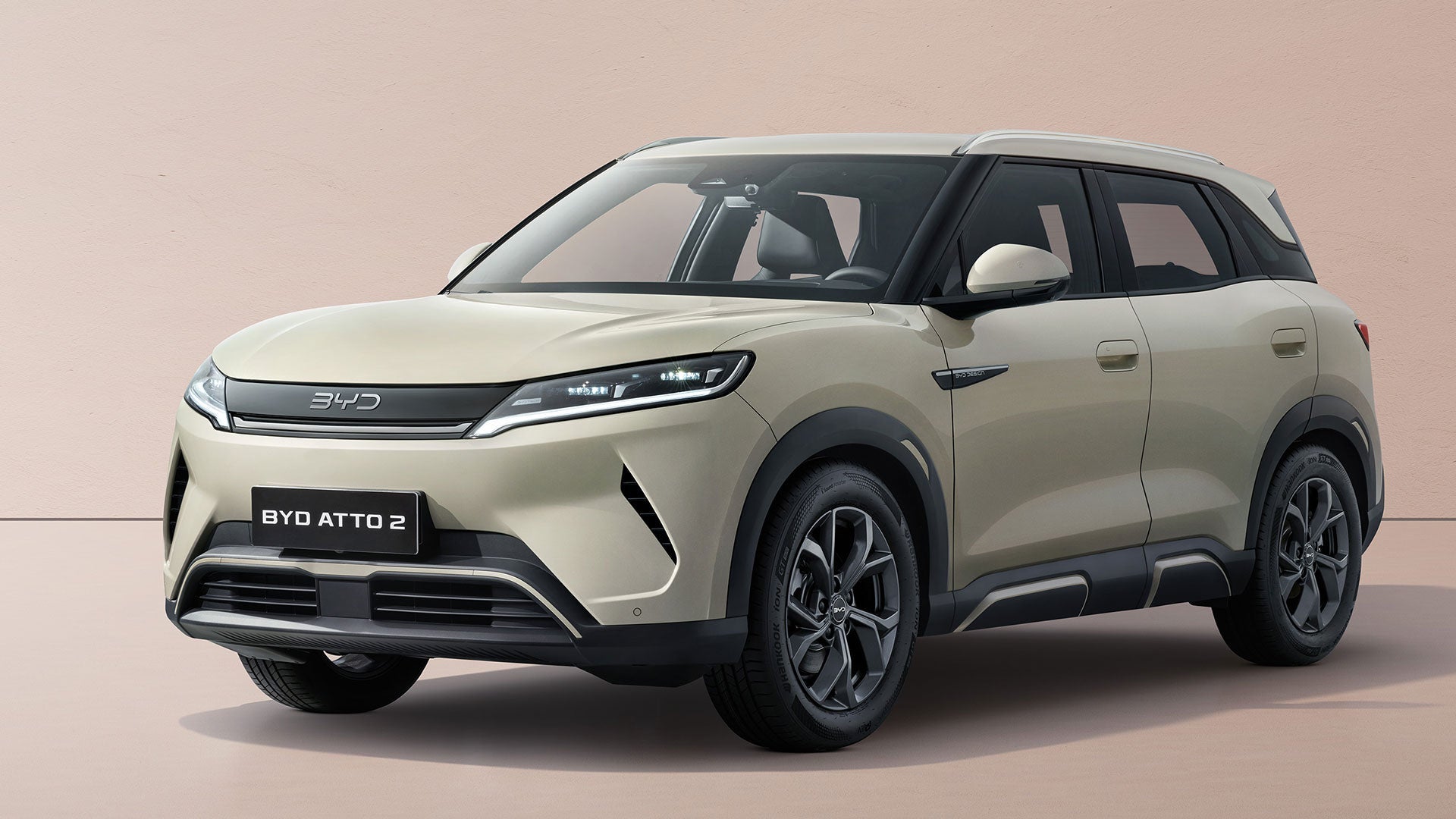
Mit dem neuen Atto 2 DM-i bringt BYD erstmals eine Hybridvariante seines bislang rein elektrischen Kompakt-SUVs nach Europa. Parallel dazu wurde auch eine Version des vollelektrischen Modells mit größerem Akku vorgestellt. Dennoch steht vor allem die PHEV-Version im Fokus, da sie gezielt auf die aktuellen Marktbedingungen zugeschnitten ist.
Das Fahrzeug nutzt die bekannte DM-i-Technologie, die bereits in anderen Modellen des Herstellers eingesetzt wird. Ziel ist es, Effizienz, Reichweite und Alltagstauglichkeit zu kombinieren, ohne vollständig auf einen Verbrennungsmotor zu verzichten.
Technisches Konzept und Antriebssystem
Im Zentrum des Antriebs steht ein 1,5-Liter-Vierzylinder-Benzinmotor, der mit zwei Elektromotoren zusammenarbeitet. Dieses Zusammenspiel sorgt dafür, dass das Fahrzeug überwiegend elektrisch fährt, während der Verbrenner vor allem zur Energieerzeugung dient.
Zusätzlich kann die Kraft bei Bedarf direkt auf die Räder übertragen werden. Dieses Konzept erinnert an Systeme anderer Hersteller, bei denen elektrische Effizienz mit mechanischer Unterstützung kombiniert wird.
Leistungsseitig bietet das Modell zwei Varianten: Die Basisversion erreicht 164 PS, während die leistungsstärkere Ausführung auf 209 PS kommt.
Elektrische Reichweite und Verbrauchswerte
Der Atto 2 DM-i wird mit zwei unterschiedlichen Batteriegrößen angeboten. Die kleinere Variante verfügt über 7,8 kWh, während die größere Batterie 18 kWh Kapazität bietet.
Mit der größeren Batterie sind laut Herstellerangaben bis zu 90 Kilometer rein elektrische Reichweite (WLTP) möglich. Die kombinierte Gesamtreichweite wird mit etwa 1.000 Kilometern angegeben. Zudem nennt BYD einen sehr niedrigen Durchschnittsverbrauch, der jedoch stark von den jeweiligen Fahrbedingungen abhängt.
Solche Effizienzwerte sollten mit Vorsicht betrachtet werden, da sie häufig unter idealisierten Testbedingungen ermittelt werden und im Alltag variieren können.
Preisstrategie und Marktpositionierung
Ein zentraler Faktor für den potenziellen Erfolg des Modells ist der Preis. Erste Einschätzungen aus Großbritannien gehen davon aus, dass der Einstiegspreis bei rund 25.000 Pfund (ca. 33.000 US-Dollar) liegen könnte.
Damit würde sich der Atto 2 DM-i als einer der günstigeren Plug-in-Hybrid-SUVs in Europa positionieren. Gerade in einem Markt, in dem viele Hersteller ihre günstigen Kompaktmodelle reduziert haben, könnte dies ein entscheidender Wettbewerbsvorteil sein.
Handelsbedingungen begünstigen PHEV-Strategie
Ein weiterer Grund für die Einführung von Hybridmodellen liegt in den aktuellen Handelsbedingungen. Importzölle auf reine Elektrofahrzeuge aus China sind in Europa vergleichsweise hoch, was deren Wettbewerbsfähigkeit einschränkt.
Plug-in-Hybride unterliegen hingegen geringeren Abgaben, wodurch sie wirtschaftlich attraktiver werden. Für Hersteller wie BYD eröffnet dies die Möglichkeit, ihre Marktpräsenz auszubauen und gleichzeitig die Profitabilität zu verbessern.
Herausforderungen für europäische Hersteller
Die Strategie chinesischer Marken könnte den Wettbewerb in Europa weiter verschärfen. Unternehmen wie BYD oder MG punkten nicht nur mit elektrischen Modellen, sondern auch mit preislich attraktiven Alternativen für Käufer mit begrenztem Budget.
Gleichzeitig haben einige etablierte Hersteller ihr Angebot im Kleinwagen- und Kompaktsegment reduziert. Diese Lücke wird nun zunehmend von neuen Marktteilnehmern gefüllt, die gezielt auf erschwingliche Mobilität setzen.
Globale Anpassung der Modellpalette
BYD zeigt zudem eine klare Fähigkeit, seine Produkte an unterschiedliche Märkte anzupassen. Während für Japan ein besonders kleines Elektrofahrzeug geplant ist, richtet sich das europäische Angebot stärker auf kompakte SUVs und Hybridmodelle aus.
Diese flexible Strategie könnte langfristig entscheidend sein, um in verschiedenen Regionen erfolgreich zu sein. Sollte das Unternehmen künftig auch in den US-Markt eintreten, ist davon auszugehen, dass es erneut gezielt auf lokale Bedürfnisse eingehen wird.

Fazit: Taktische Neuausrichtung mit klarer Perspektive
Mit dem Atto 2 DM-i verfolgt BYD einen pragmatischen Ansatz, der aktuelle Marktbedingungen berücksichtigt. Statt ausschließlich auf Elektromobilität zu setzen, kombiniert das Unternehmen verschiedene Antriebstechnologien, um ein breiteres Publikum anzusprechen.
Die Einführung dieses Modells in Europa unterstreicht, dass Flexibilität und Preisgestaltung zunehmend entscheidend für den Erfolg im globalen Automobilmarkt sind.
Weitere Lektüre: EU ändert 2035-Ziel für Verbrenner: Neue Emissionsregeln erklärt



Teilen:
Elektrischer Roadster SC01 aus China kommt nach Europa
GAC startet EV-Produktion in Europa mit Magna-Partnerschaft