

Strong Increase in Electric Drives in Spring 2026
The German automotive market shows a clear trend towards electrified powertrains in March 2026. Both all-electric vehicles and plug-in hybrids are recording significant increases in new registrations.
The dynamics of purely battery-electric vehicles are particularly striking. With a total of 70,663 newly registered units, this represents a growth of 66.2 percent compared to the same period last year. These vehicles now account for a market share of around 24 percent.

Battery-electric models drive the market
The strong development of all-electric vehicles indicates that this type of drive is increasingly establishing itself in the mass market. Demand is growing not only in absolute numbers, but also relative to the overall market.
Key factors are likely to be the continuous improvements in range, charging infrastructure and model diversity. At the same time, political framework conditions and rising fuel prices are contributing to the fact that more and more buyers are opting for electric alternatives.
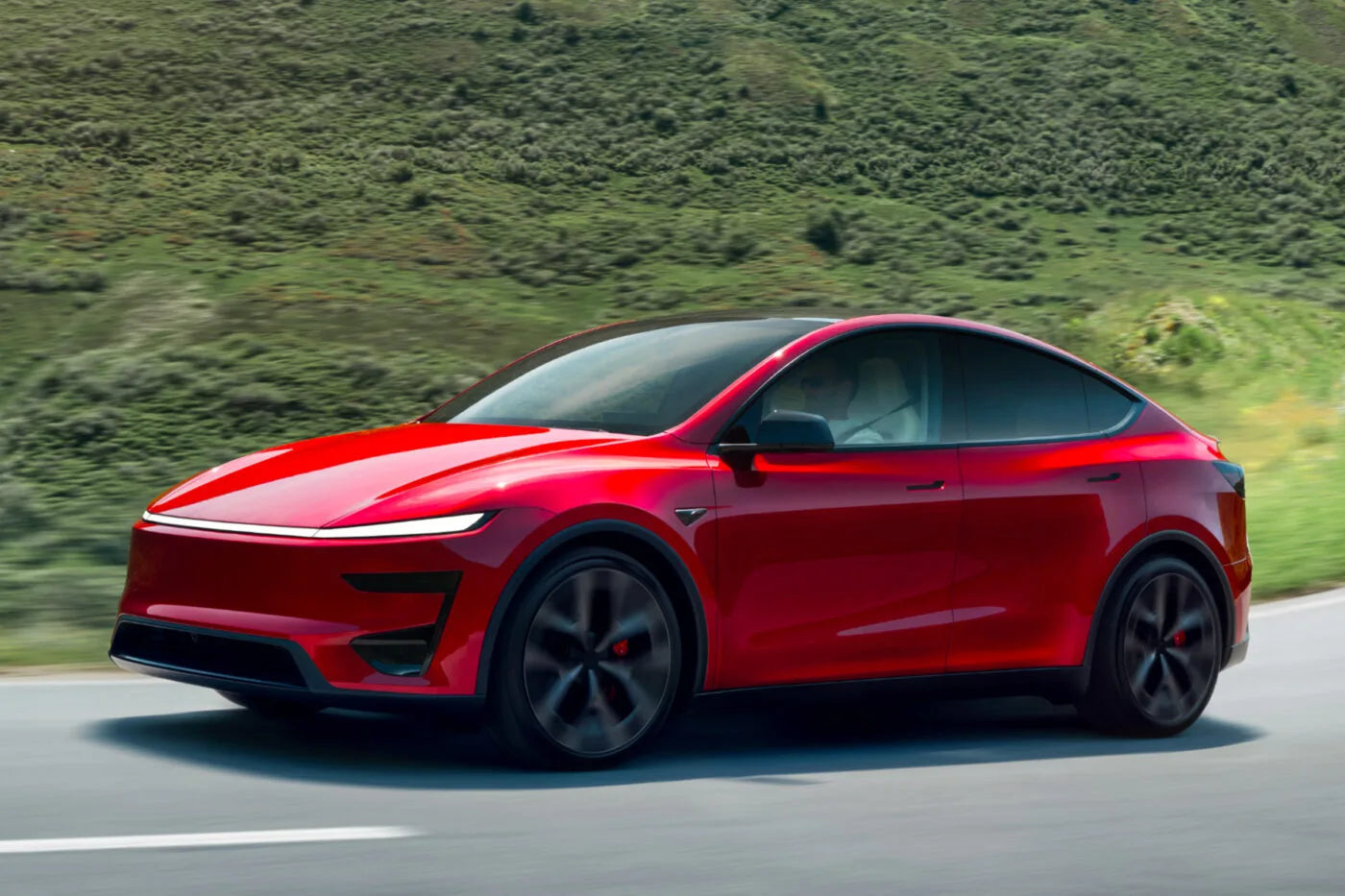
In the model comparison, the Tesla Model Y continues to lead. With 6,841 new registrations in March, the vehicle once again asserts itself as the best-selling electric car in Germany.
Plug-in hybrids remain an important component
In addition to purely electric vehicles, plug-in hybrids are also continuing to develop positively, albeit at a more moderate pace. In March, 29,996 vehicles in this category were newly registered, which corresponds to an increase of 13 percent.
The share of this type of drive in the overall market is thus around 10.2 percent. Despite the growing competition from purely electric vehicles, plug-in hybrids retain their role as a transitional solution for customers who want flexibility between internal combustion and electric operation.
In the plug-in hybrid segment, the VW Tiguan leads the ranking. With 1,339 new registrations, the model takes the top spot in the month-on-month comparison.
Interplay of both technologies strengthens the change
The parallel development of battery-electric vehicles and plug-in hybrids shows that the shift towards alternative powertrains is not only driven by a single technology. Rather, both concepts complement each other in the current market environment.
While BEVs increasingly stand for purely electric mobility, plug-in hybrids offer a bridge for users who do not yet want to completely do without internal combustion engines. This interplay helps to increase the acceptance of electrified vehicles as a whole.
Significance for manufacturers and infrastructure
For car manufacturers, this development means that investments in electric drives continue to gain importance. At the same time, the pressure to offer attractive models with convincing range and charging performance is increasing.
The expansion of the charging infrastructure also remains a decisive factor. The increasing registration figures increase the demand for powerful and comprehensive charging options, especially in public spaces.

Outlook for the coming months
The current figures indicate that the trend could continue in the coming months. Should demand remain stable or continue to grow, electric drives could further expand their share of the overall market.
It will be crucial how framework conditions such as subsidy programs, energy prices and technological advances develop. However, one thing is already clear: electrified vehicles play an increasingly central role in the German automotive market.
Weitere Lektüre: BEV-Verkäufe im Jahr 2026: Mazda und BYD verzeichnen höchste Wachstumsraten


Share:
Denza launches in Europe in 2026: BYD focuses on premium strategy
Can an electric car be charged from a household socket?