

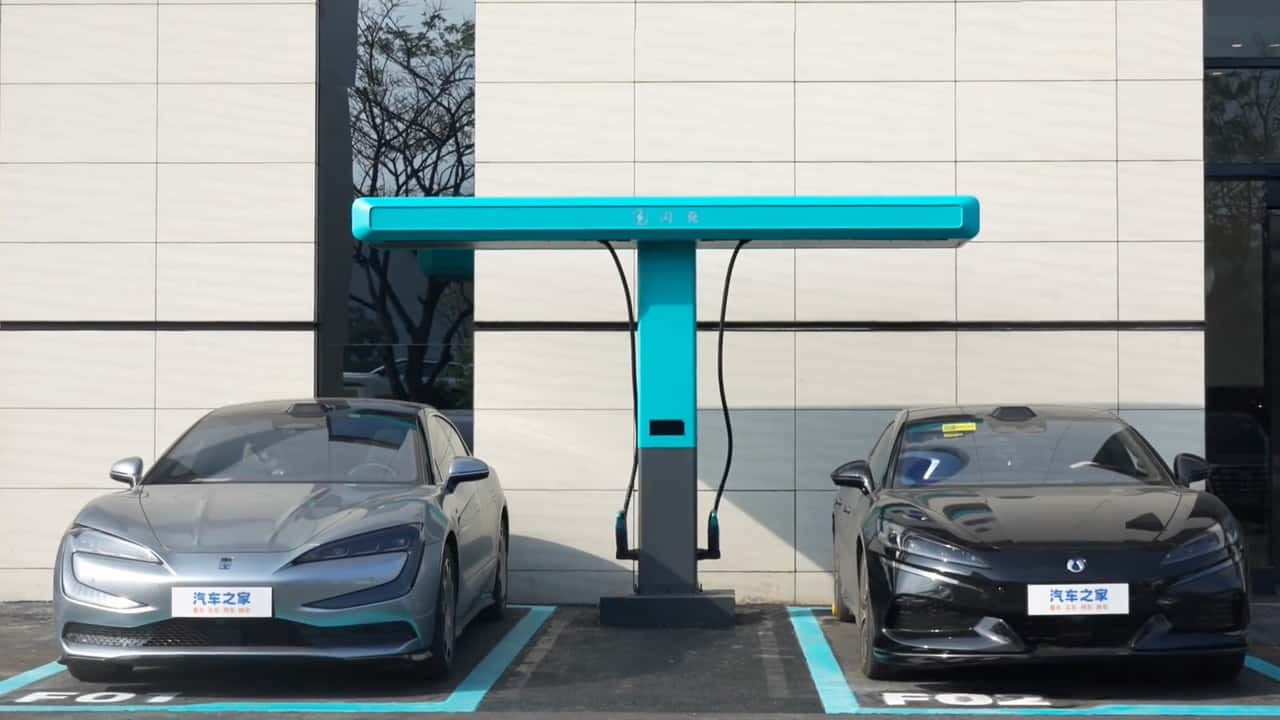
Zwei Spannungswelten im Vergleich
Die meisten aktuellen Elektrofahrzeuge basieren auf einem 400-Volt-System, doch zunehmend setzen Hersteller auf 800-Volt-Technik, vor allem in höherpreisigen und leistungsorientierten Modellen. Beide Ansätze verfolgen unterschiedliche technische Strategien und bringen jeweils spezifische Vorteile mit sich.
Die Koexistenz dieser Systeme ist kein Zufall. Sie ergibt sich aus verschiedenen Anforderungen an Kosten, Leistung und Einsatzbereich. Eine pauschale Überlegenheit lässt sich daher nicht feststellen.

Physikalische Grundlagen der Spannung
Die Ladeleistung eines Elektroautos hängt direkt von zwei Faktoren ab: Spannung und Stromstärke. Wird die Spannung erhöht, kann bei gleicher Leistung der Strom reduziert werden. Das führt zu weniger Wärmeverlusten und ermöglicht effizientere Energieübertragung.
Ein vergleichbares Prinzip wird seit Langem im Stromnetz genutzt. Hochspannungsleitungen transportieren Energie über große Entfernungen mit minimalen Verlusten, indem sie die Spannung stark erhöhen und so den Stromfluss reduzieren. In Elektroautos wird dieses Konzept im kleineren Maßstab angewendet.
Ladeleistung im Alltag
Ein häufig genannter Vorteil von 800-Volt-Systemen ist die potenziell höhere Ladegeschwindigkeit. Fahrzeuge mit dieser Architektur erreichen oft Spitzenwerte zwischen 230 und 350 kW und können diese Leistung über einen längeren Zeitraum halten.
Modelle mit 400 Volt haben in den letzten Jahren jedoch deutliche Fortschritte gemacht. Ladeleistungen von über 200 kW sind inzwischen möglich, allerdings sinkt die Leistung häufig schneller ab, da thermische Grenzen früher erreicht werden.
Wichtig ist: Die tatsächliche Ladezeit hängt nicht allein von der Fahrzeugtechnik ab. Auch die verfügbare Ladeinfrastruktur spielt eine entscheidende Rolle. Ein 800-Volt-Fahrzeug kann sein Potenzial nur an entsprechend leistungsfähigen Schnellladesäulen ausschöpfen.
Effizienz, Gewicht und Dauerbelastung
Durch die geringere Stromstärke benötigen 800-Volt-Systeme dünnere Kabel und erzeugen weniger Abwärme. Das kann zu einem geringeren Gesamtgewicht und höherer Effizienz führen, insbesondere bei hohen Leistungsanforderungen wie Autobahnfahrten oder Anhängerbetrieb.
Zudem verbessert sich die Stabilität bei wiederholten hohen Belastungen, etwa beim starken Beschleunigen oder bei intensiver Rekuperation.
400-Volt-Systeme hingegen sind technisch ausgereift und bieten im Alltag bereits sehr gute Wirkungsgrade. Für typische Nutzungsszenarien wie Stadtverkehr oder Pendelstrecken ist der Unterschied in der Praxis oft gering.
Kosten und technische Komplexität
Ein entscheidender Faktor für Hersteller ist der finanzielle Aufwand. 400-Volt-Architekturen gelten als kostengünstiger, da sie auf weit verbreiteten Komponenten basieren und weniger komplexe Anforderungen an Isolation und Leistungselektronik stellen.
Die Umsetzung von 800 Volt erfordert dagegen fortschrittlichere Bauteile, etwa Halbleiter aus Siliziumkarbid, sowie aufwendigere Kühlung und Sicherheitsmaßnahmen. Diese zusätzlichen Kosten machen die Technologie vor allem für Fahrzeuge attraktiv, bei denen hohe Leistung und Effizienz entscheidend sind.
Marktsegmente und Entwicklungstrends
Der Markt zeigt eine klare Differenzierung:
- Kompakt- und Mittelklassefahrzeuge setzen überwiegend auf 400 Volt, da hier Preis und Alltagstauglichkeit im Vordergrund stehen.
- Große SUVs, Limousinen und Sportmodelle nutzen zunehmend 800-Volt-Systeme, um Vorteile bei Schnellladen und Performance zu erzielen.
Zukünftige Plattformen werden zunehmend flexibel ausgelegt. Viele Hersteller arbeiten an skalierbaren Architekturen, die beide Spannungsniveaus unterstützen können. Dadurch lassen sich Fahrzeuge je nach Zielgruppe und Einsatzzweck anpassen.
Bedeutung für den Alltag
Für die meisten Nutzer ist die Systemspannung nicht der entscheidende Faktor. Wichtiger sind reale Ladezeiten, Energieverbrauch im Alltag und die Anschaffungskosten. Moderne 400-Volt-Fahrzeuge bieten hier bereits ein hohes Niveau ohne spürbare Nachteile im täglichen Einsatz.
Ein 800-Volt-System entfaltet seine Vorteile vor allem unter bestimmten Bedingungen:
- bei häufigen Langstreckenfahrten,
- wenn sehr kurze Ladepausen entscheidend sind,
- bei großen oder besonders leistungsstarken Fahrzeugen.

Fazit: Koexistenz statt Konkurrenz
Beide Technologien erfüllen unterschiedliche Anforderungen. 400 Volt bleibt die wirtschaftliche Lösung für den Massenmarkt, während 800 Volt vor allem in leistungsorientierten und größeren Fahrzeugen Vorteile bietet.
Die weitere Entwicklung deutet darauf hin, dass beide Systeme parallel bestehen bleiben. Je nach Fahrzeugklasse und Nutzung wird die passende Architektur gewählt – ein einheitlicher Standard ist derzeit nicht absehbar.
Weitere Lektüre: Starkes Wachstum bei E-Autos – BYD als führender Importeur




Teilen:
Lucid Gravity SUV: Leasingpreise und Varianten im Überblick
Schnellladen im Fokus: Wie Hochvolttechnik E-Autos voranbringt