

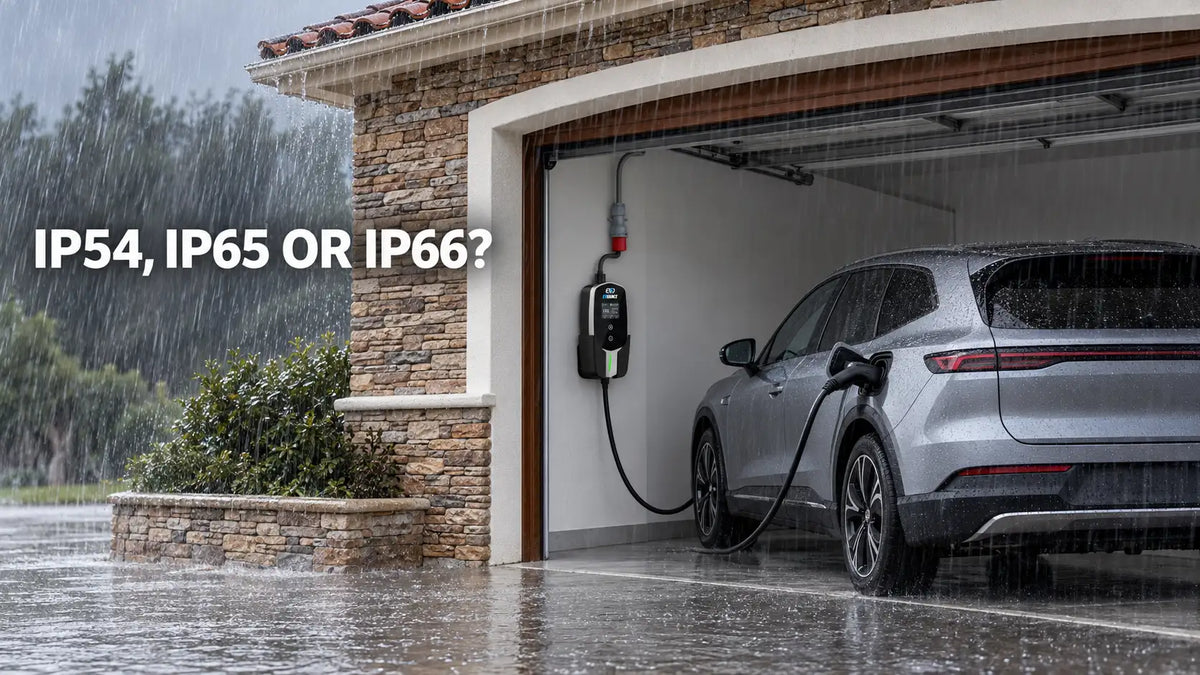
An IP rating shows how well an EV charger enclosure resists dust and water. The first digit describes protection against solid objects, while the second describes protection against water. The appropriate rating depends mainly on whether the charger is used in a garage, under a covered parking area or in a more exposed outdoor location.
How an IP Rating Works
IP stands for Ingress Protection. The two digits following “IP” describe separate forms of protection.
| Part of the code | Meaning |
|---|---|
| First digit | Protection against solid objects and dust |
| Second digit | Protection against water |
| Higher number | A higher tested level within that category |
In IP66, for example, the first 6 means the enclosure is dust-tight. The second 6 refers to protection against powerful water jets.
The two digits describe different conditions. An IP rating therefore provides more specific information than a general “waterproof” description.

IP54, IP65 and IP66 Compared
| IP rating | Dust protection | Water protection |
|---|---|---|
| IP54 | Protected against harmful dust ingress | Protected against splashing water |
| IP65 | Dust-tight | Protected against water jets |
| IP66 | Dust-tight | Protected against powerful water jets |
The main difference between IP65 and IP66 is the strength of the tested water exposure. Their first digit is the same, so both ratings indicate a dust-tight enclosure.
IP66 describes protection against powerful water jets rather than immersion. Protection against temporary immersion is represented by a different second digit, such as the 7 in IP67.
The Charging Location Helps Determine the Rating
A charger used inside a dry garage has less direct exposure to rain. However, dust, moisture and occasional splashes may still be present, so the IP rating remains a useful product specification.
A covered outdoor parking space offers more shelter, but wind can still carry rain and dirt toward the charging equipment. IP65 or IP66 protection can provide greater suitability for these changing outdoor conditions.
A fully exposed driveway places greater demands on the enclosure. In this setting, IP66 offers stronger protection against water than IP54 or IP65, making it a practical feature for equipment designed for regular outdoor use.
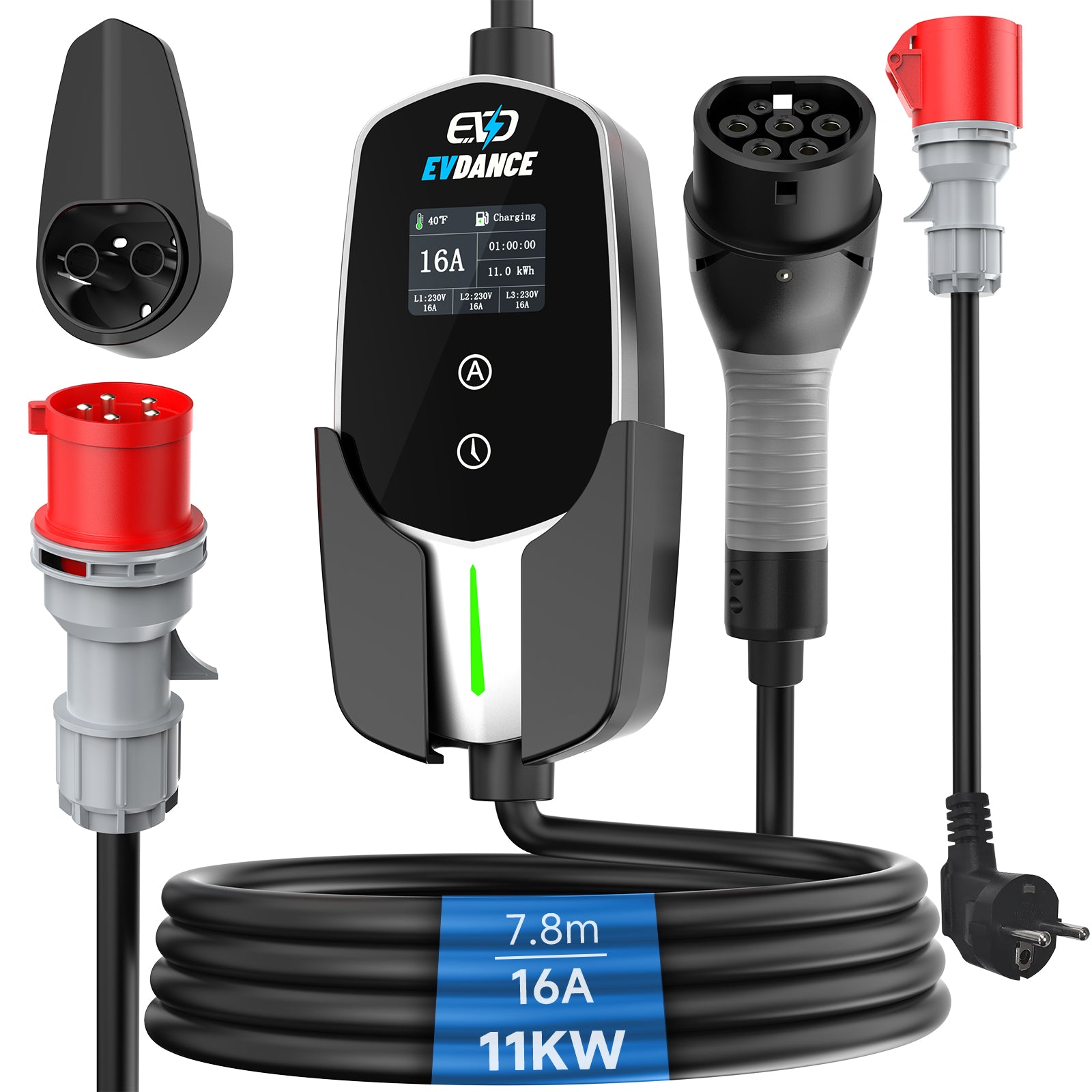
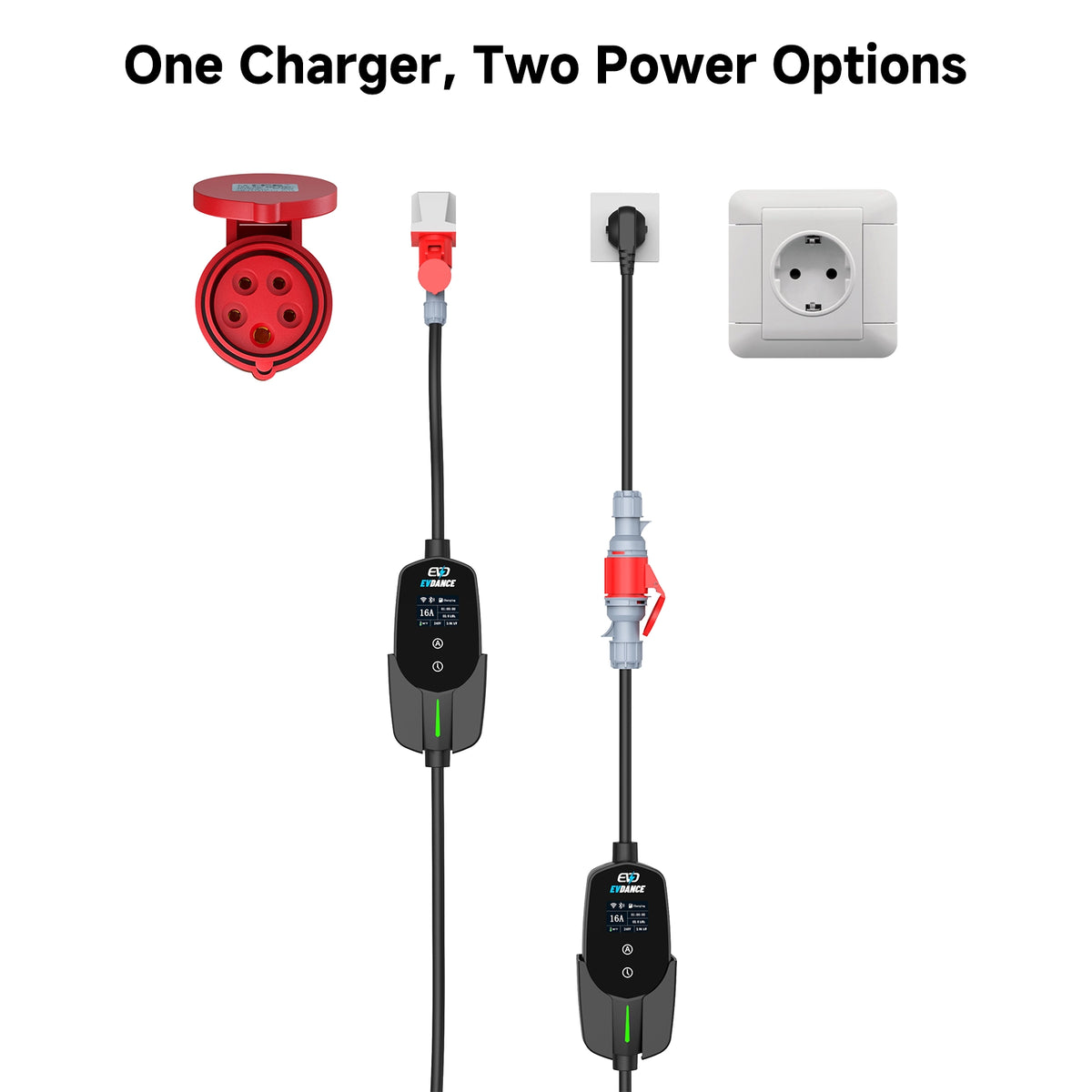
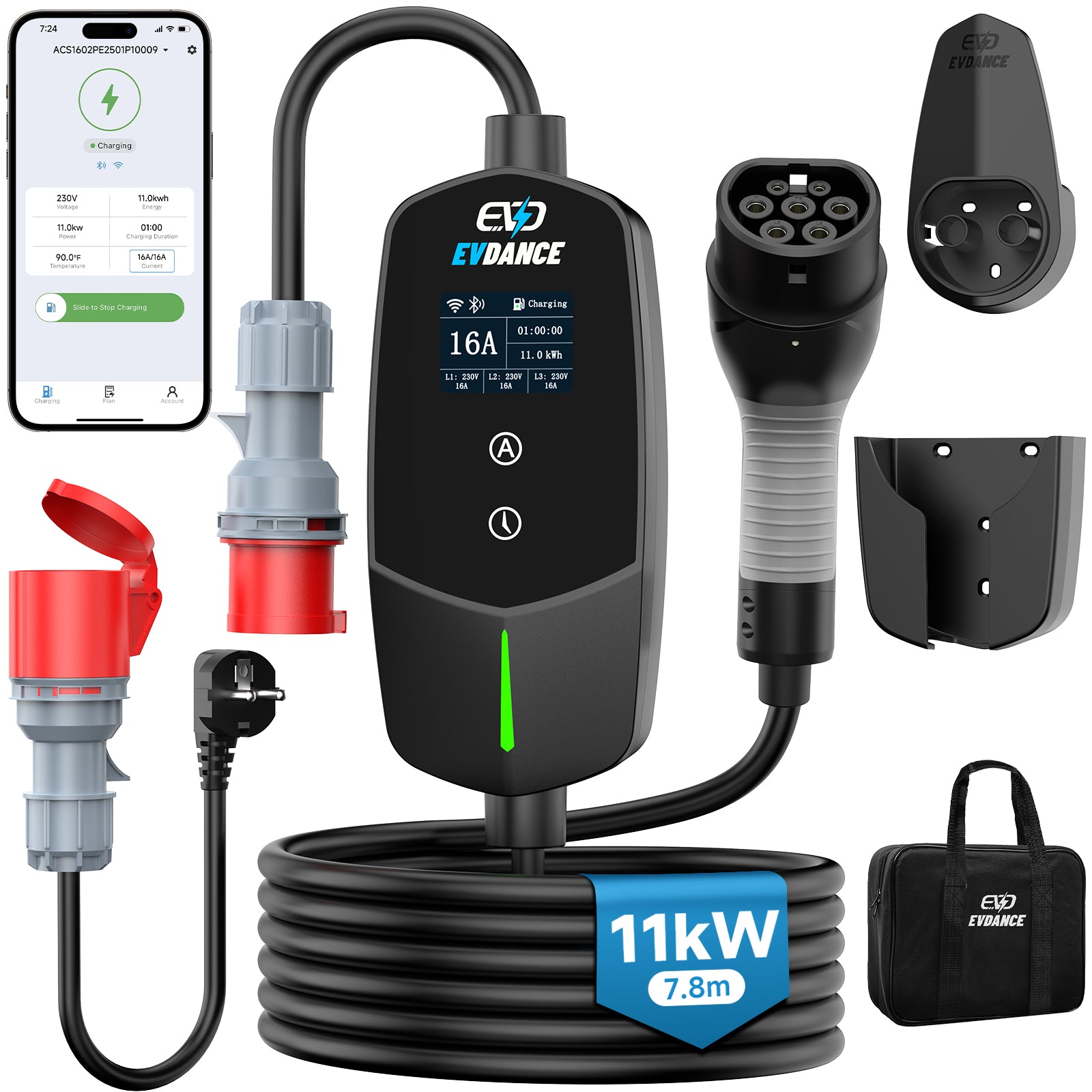
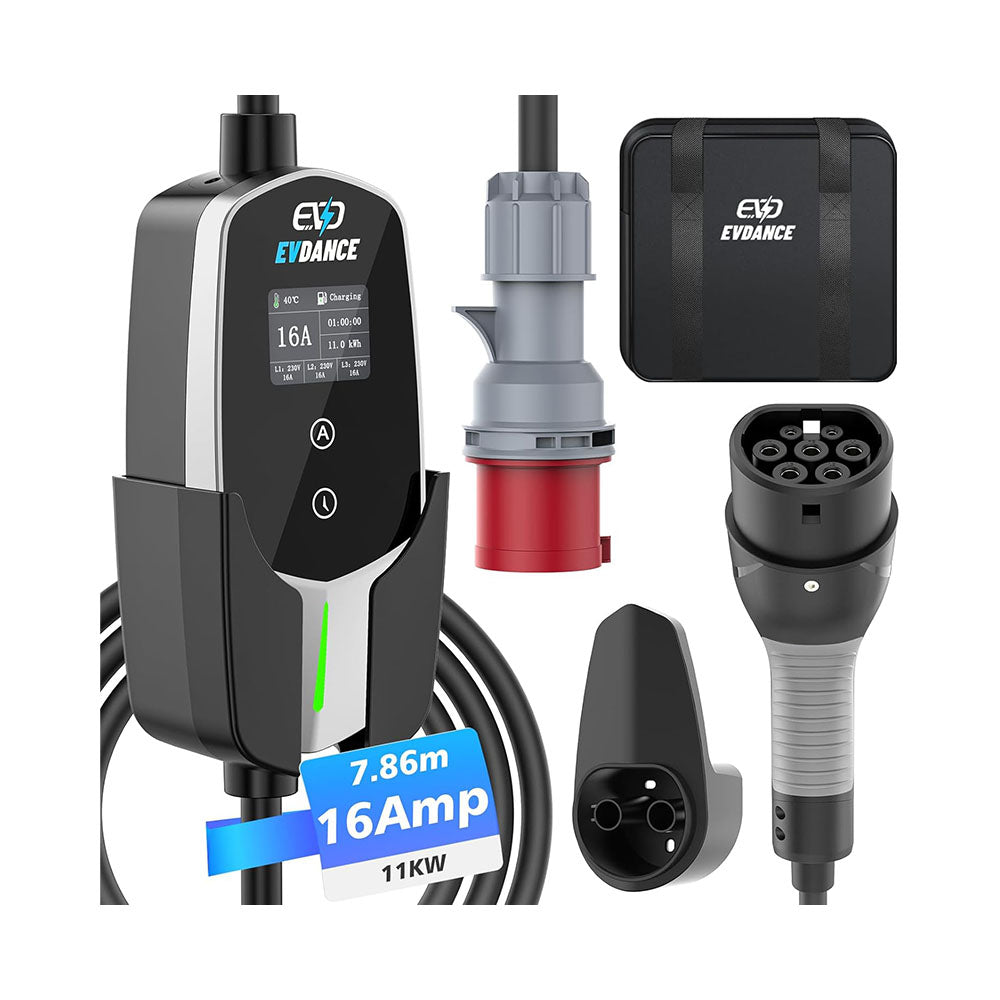
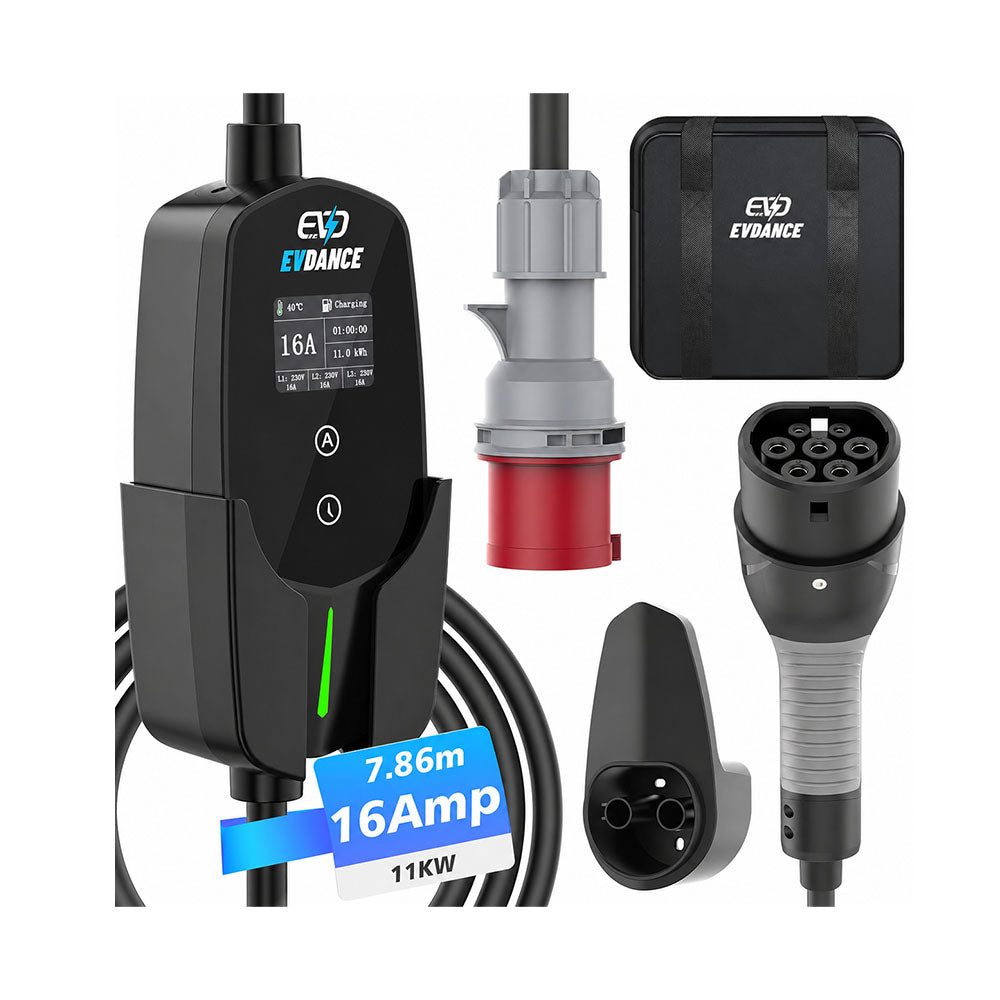
For a driver who regularly charges from a compatible CEE socket in an outdoor parking area, an 11 kW CEE mobile wallbox with IP66 weather protection combines three-phase charging with protection against dust and powerful water jets.
The IP Rating Is One Part of the Choice
The IP rating focuses specifically on protection against solid objects and water. Other specifications determine whether the charger fits the planned charging setup.
The plug type, voltage, current and number of phases need to match the available electrical connection. The product’s operating temperature is also relevant when the charger will be used outdoors throughout the year.
Product specifications and operating instructions provide the final reference for the intended environment. A suitable EV charger combines the appropriate IP rating with the correct electrical connection and operating conditions.
An IP rating makes it easier to compare protection against dust and water. IP54, IP65 and IP66 represent different tested conditions, so the appropriate choice depends on the charging location and expected weather exposure.
Recommend Reading: Schuko or CEE: Which EV Charger Is the Better Fit?






Share:
Which Charger Is Suitable for a Plug-in Hybrid?
Is It Safe to Charge an Electric Car from a Schuko Socket Every Day?