

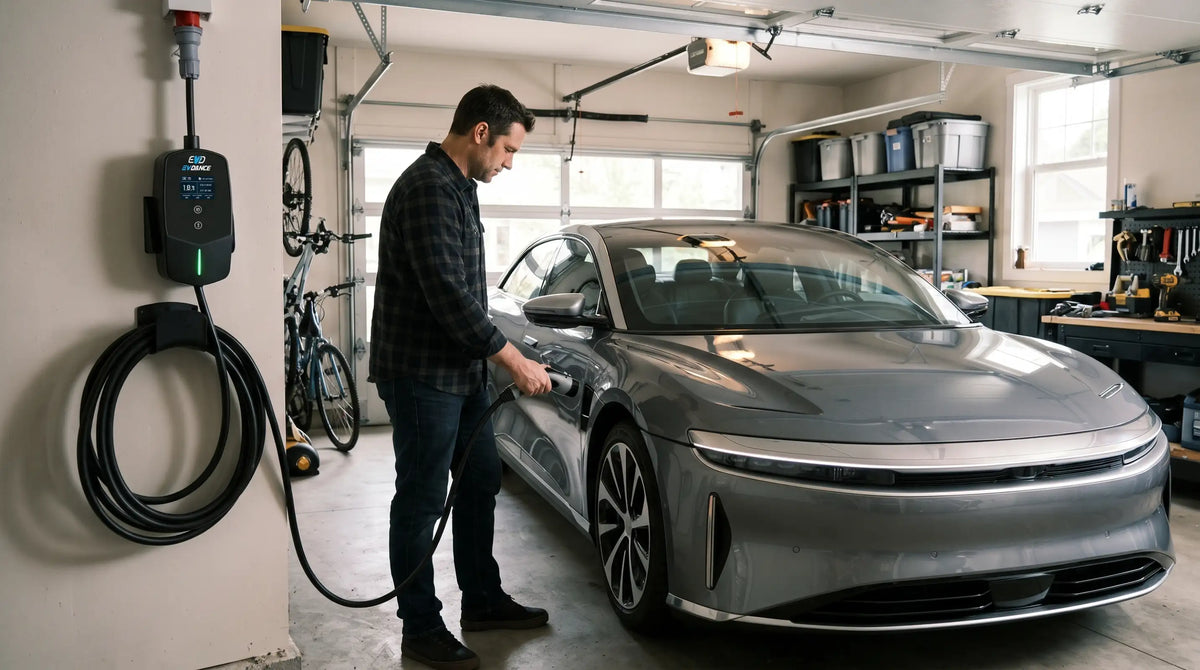
Black Friday can be a good time to buy home EV charging equipment, but the right choice depends more on the available power connection and daily charging routine than on the size of the discount.
A driver relying on a household socket has different requirements from someone who already has a three-phase CEE socket. A charger that moves between several locations also serves a different purpose from one that remains beside the same parking space.
This guide compares three practical options without suggesting that every household needs the most powerful or feature-rich charger.
Three Home Charging Setups at a Glance
| Home setup | Suitable charging option | Best suited to |
|---|---|---|
| No dedicated charging point | Schuko portable EV charger | Backup and occasional charging |
| Compatible three-phase CEE 16A socket | 11 kW mobile wallbox | Flexible charging at several known locations |
| One regular parking space with CEE supply | Wall-mounted 11 kW wallbox | Convenient daily charging and cable management |
These options are not ranked from basic to advanced. Each one is designed around a different electrical connection and charging routine.

Flexible Charging Without a Dedicated Wallbox
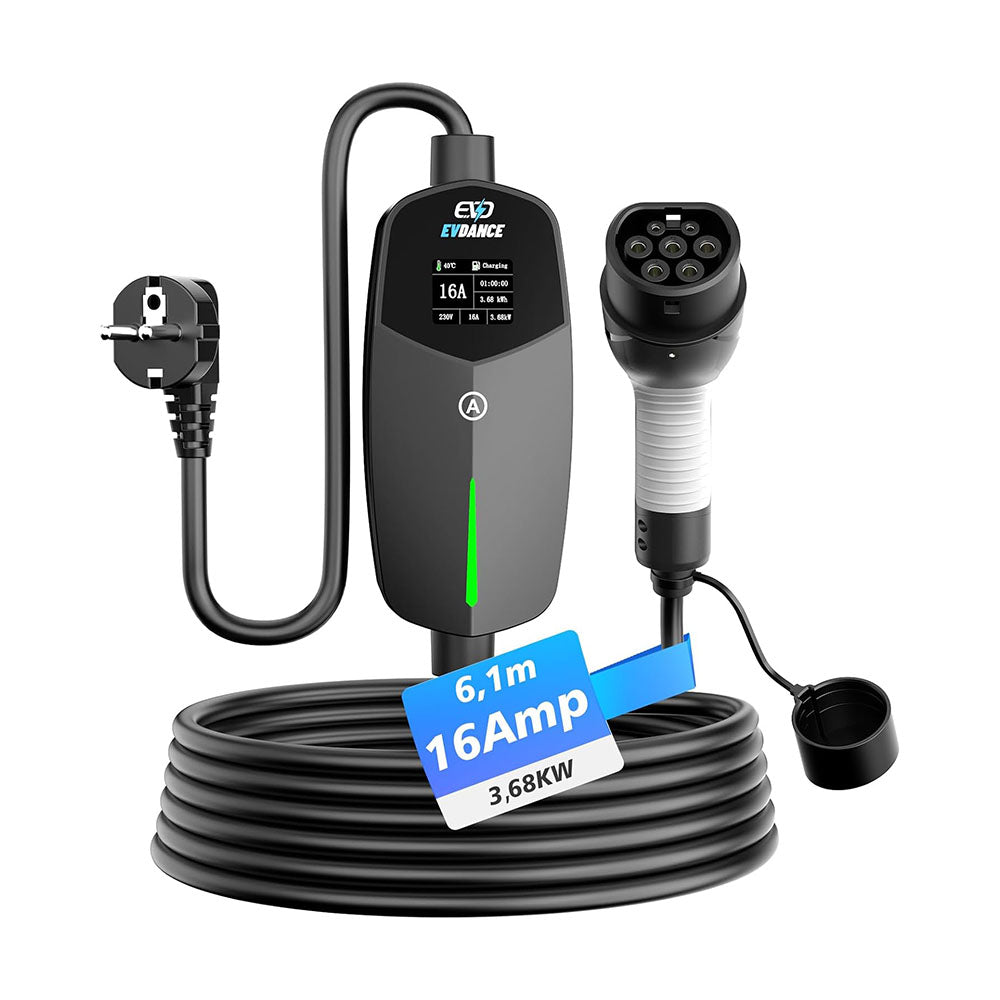
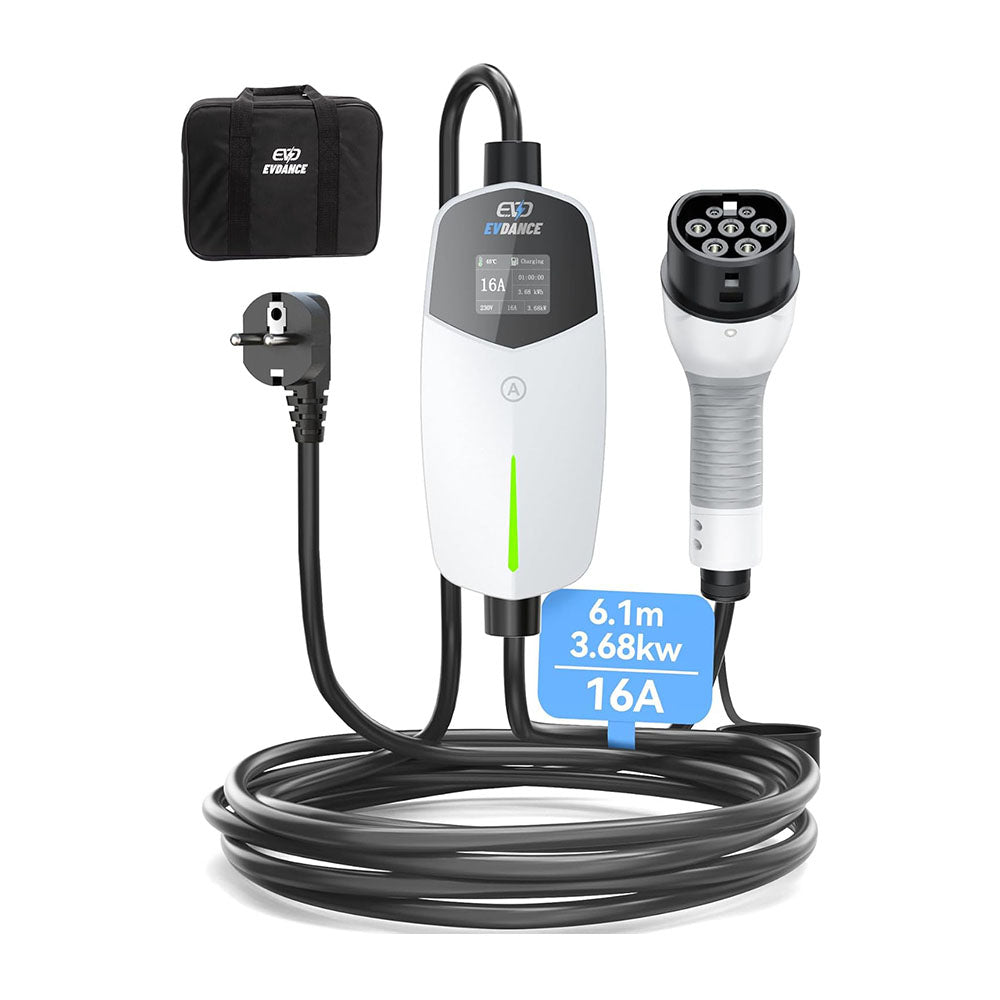
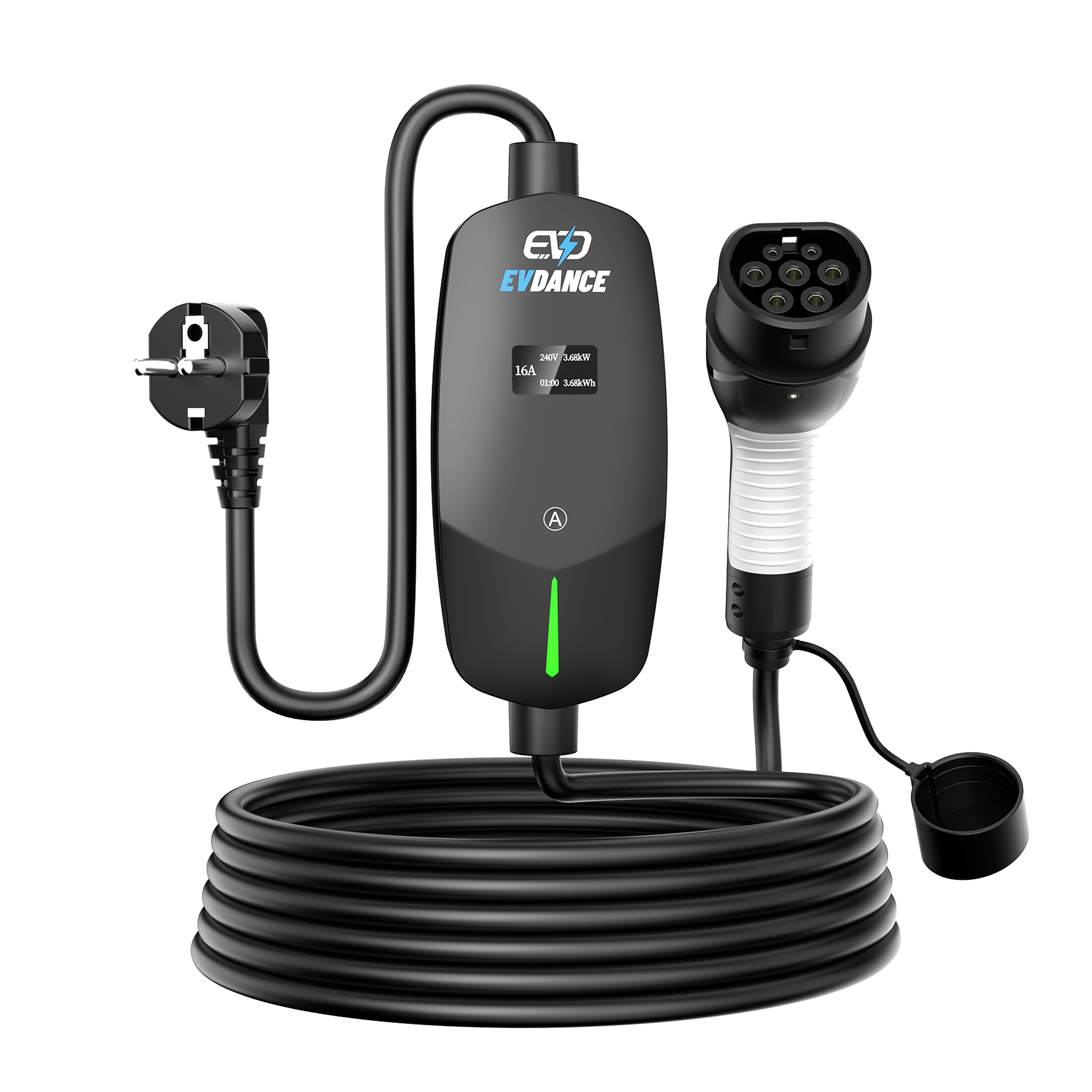
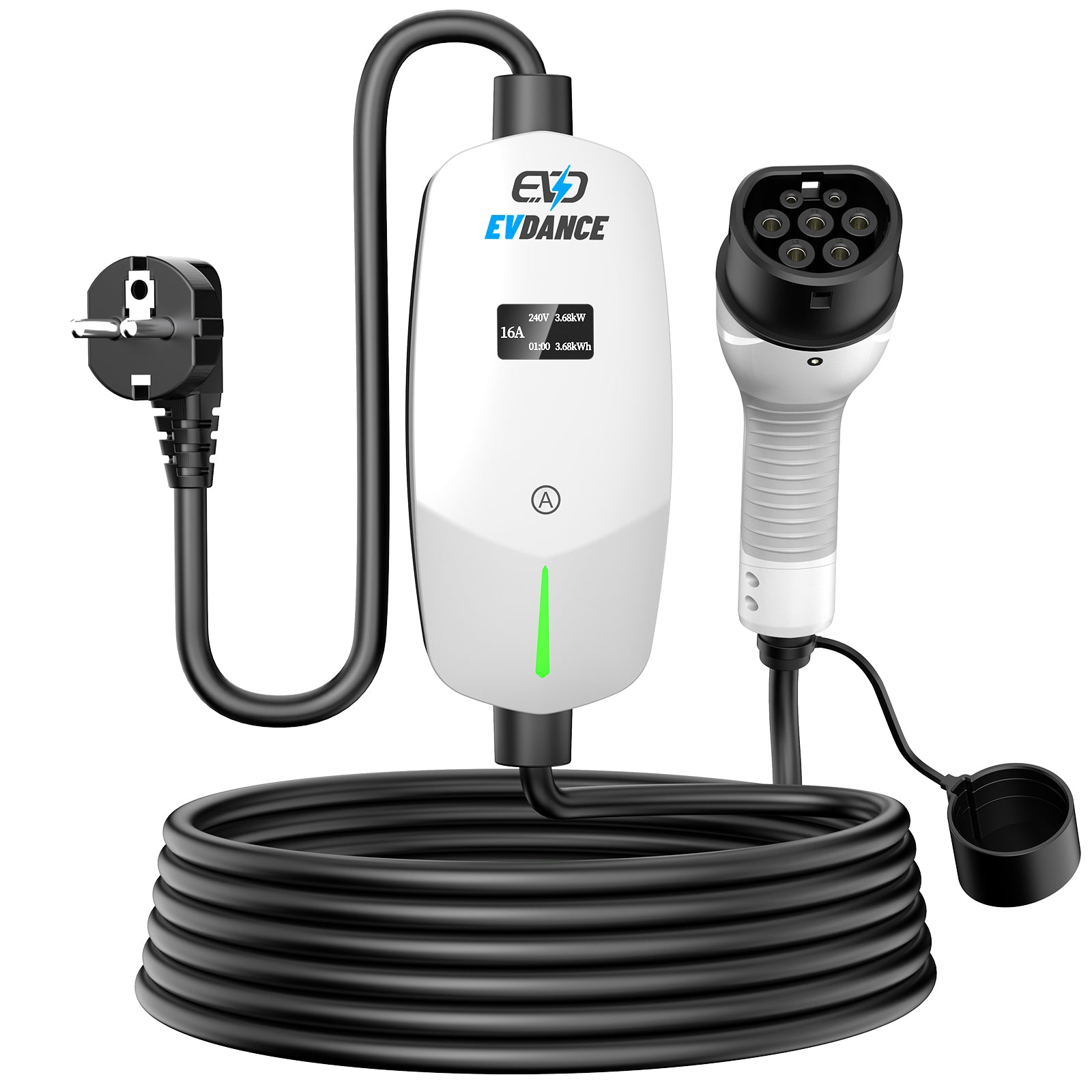
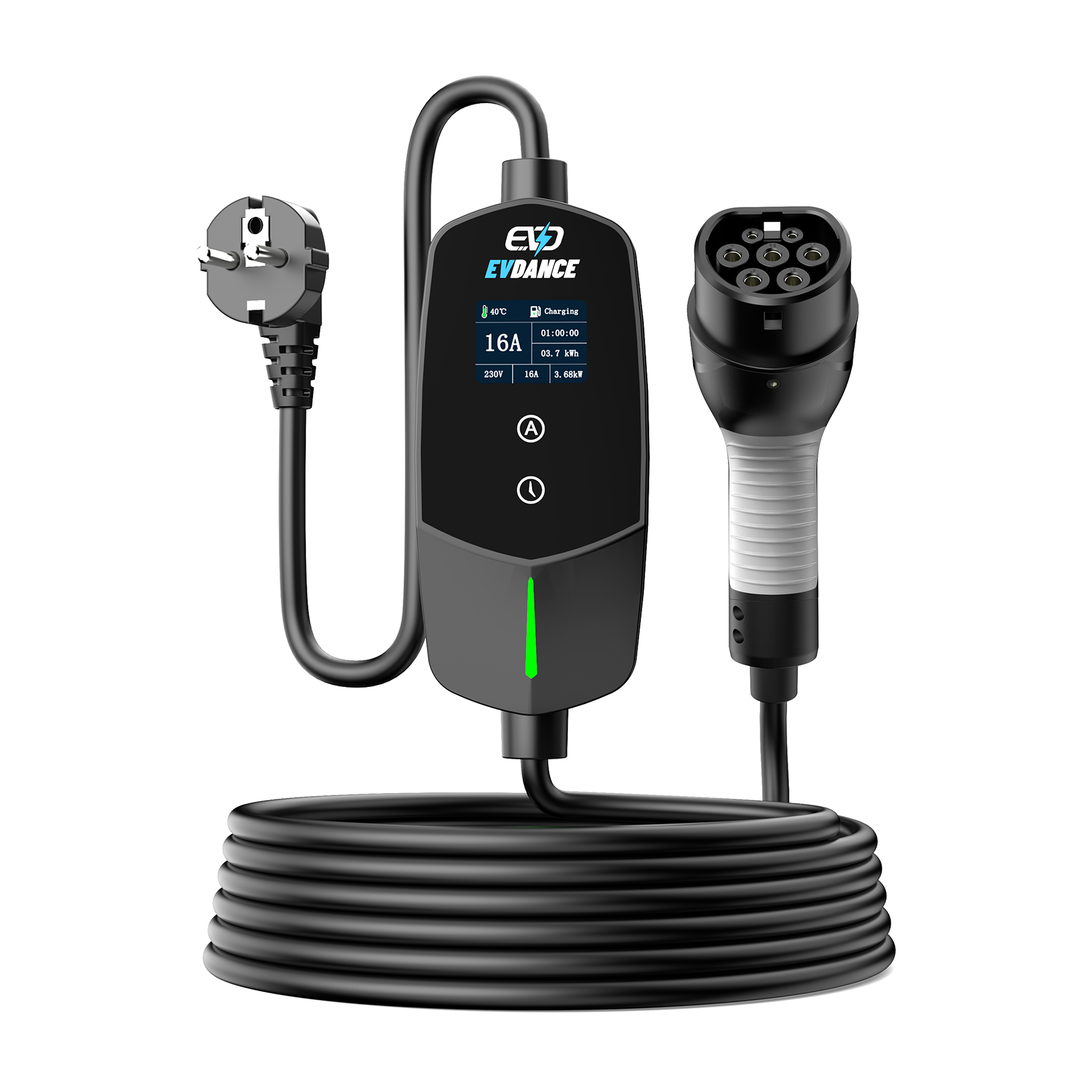
A Schuko portable charger can be useful for drivers who do not have a dedicated wallbox or want to keep a backup charger in the vehicle. It connects to a suitable 230 V household socket and can be stored after use.
The EVDANCE Schuko portable EV charger provides 6 A, 8 A, 10 A, 13 A and 16 A settings, with a maximum rated output of 3.68 kW at 230 V. Its display shows charging information, while delayed charging and adjustable current provide more control over when and how the vehicle charges.
This option suits occasional charging, overnight top-ups and locations where no CEE connection is available. However, the condition and capacity of the socket and circuit remain important. A lower current setting reduces the electrical demand but does not make a damaged or unsuitable socket safe.
For more detail, read Is It Safe to Charge an Electric Car from a Schuko Socket Every Day?.
Three-Phase Charging from an Existing CEE Socket
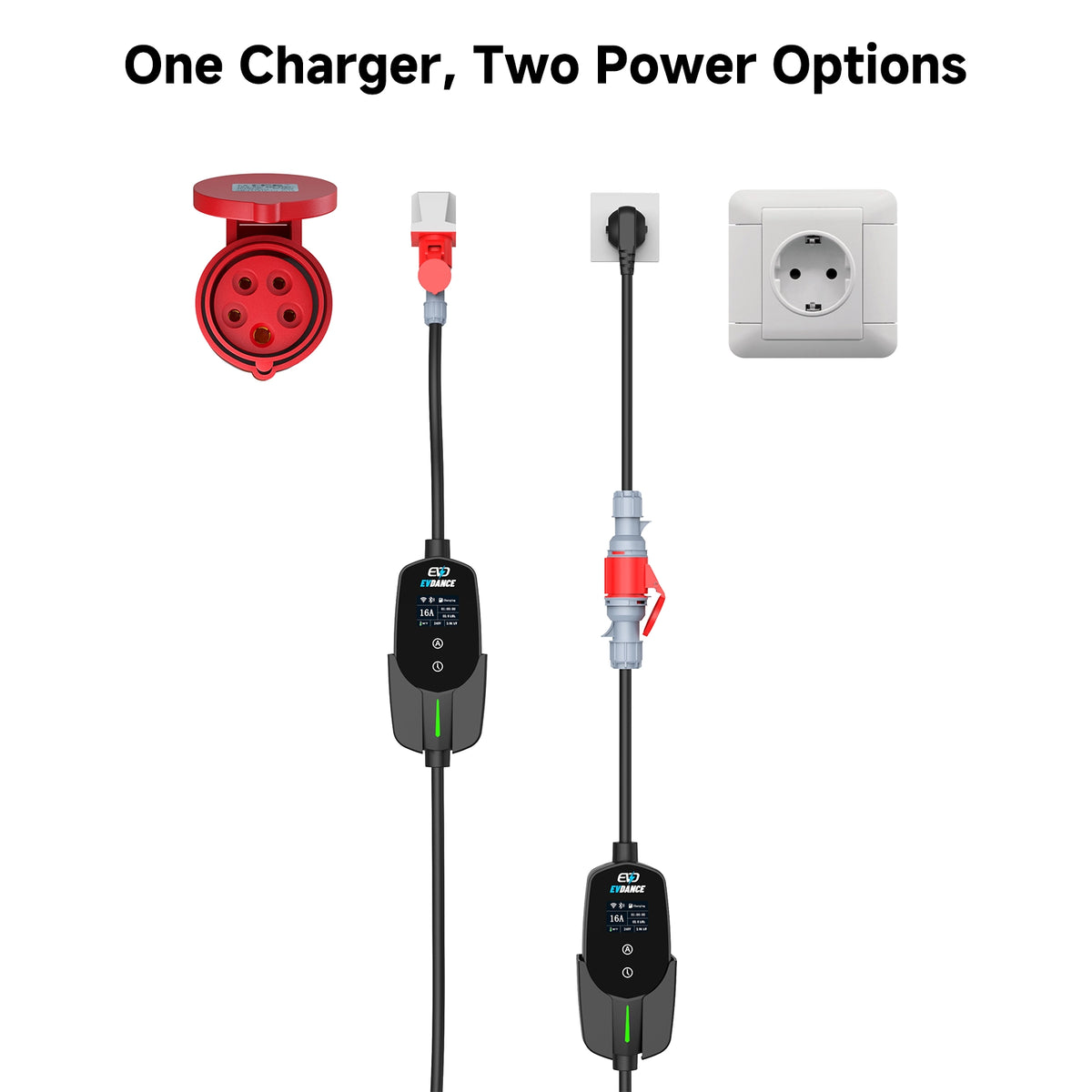
A household that already has a compatible 400 V three-phase CEE 16A socket can consider an 11 kW mobile wallbox. This provides substantially more available charging power than a standard household socket while keeping the charger transportable.
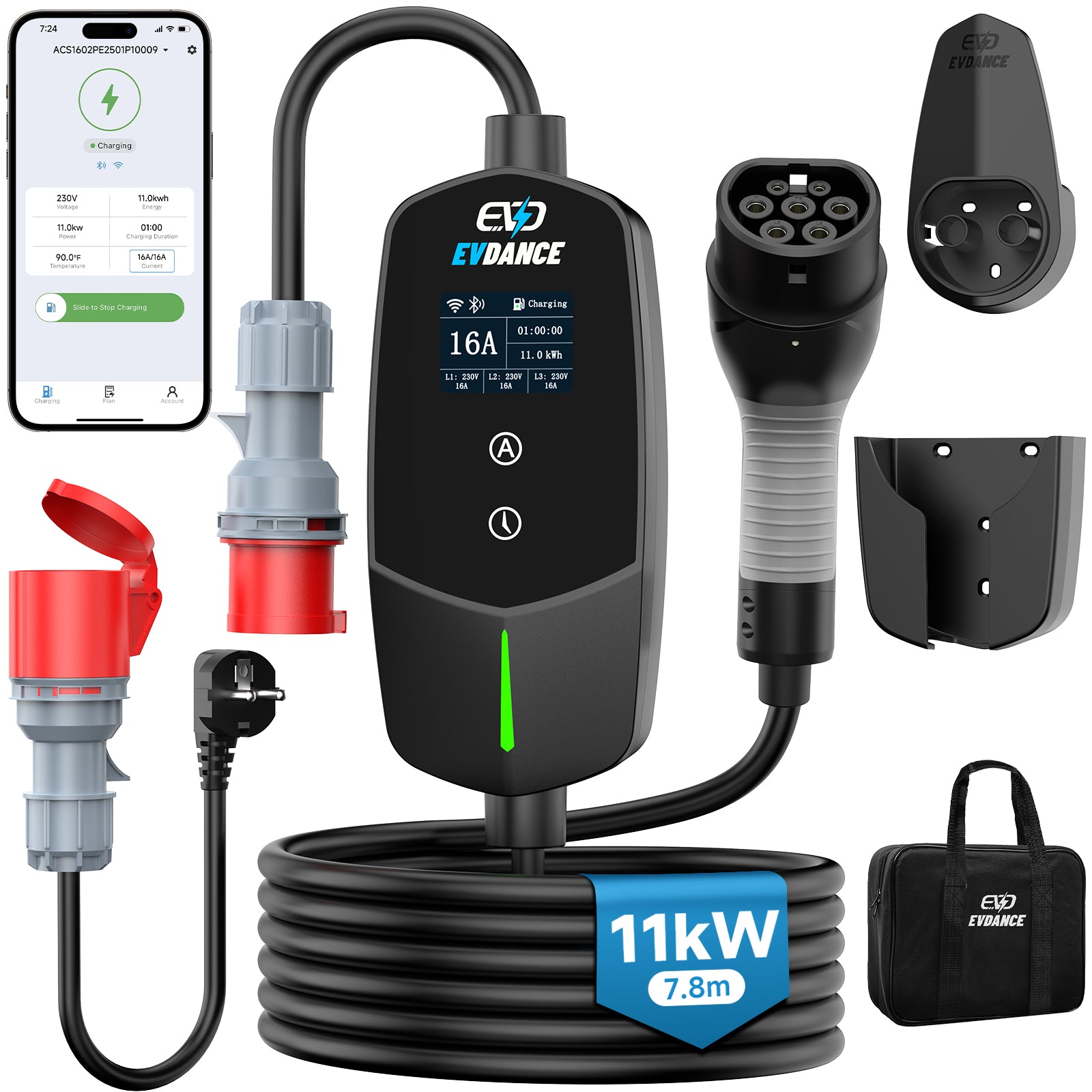
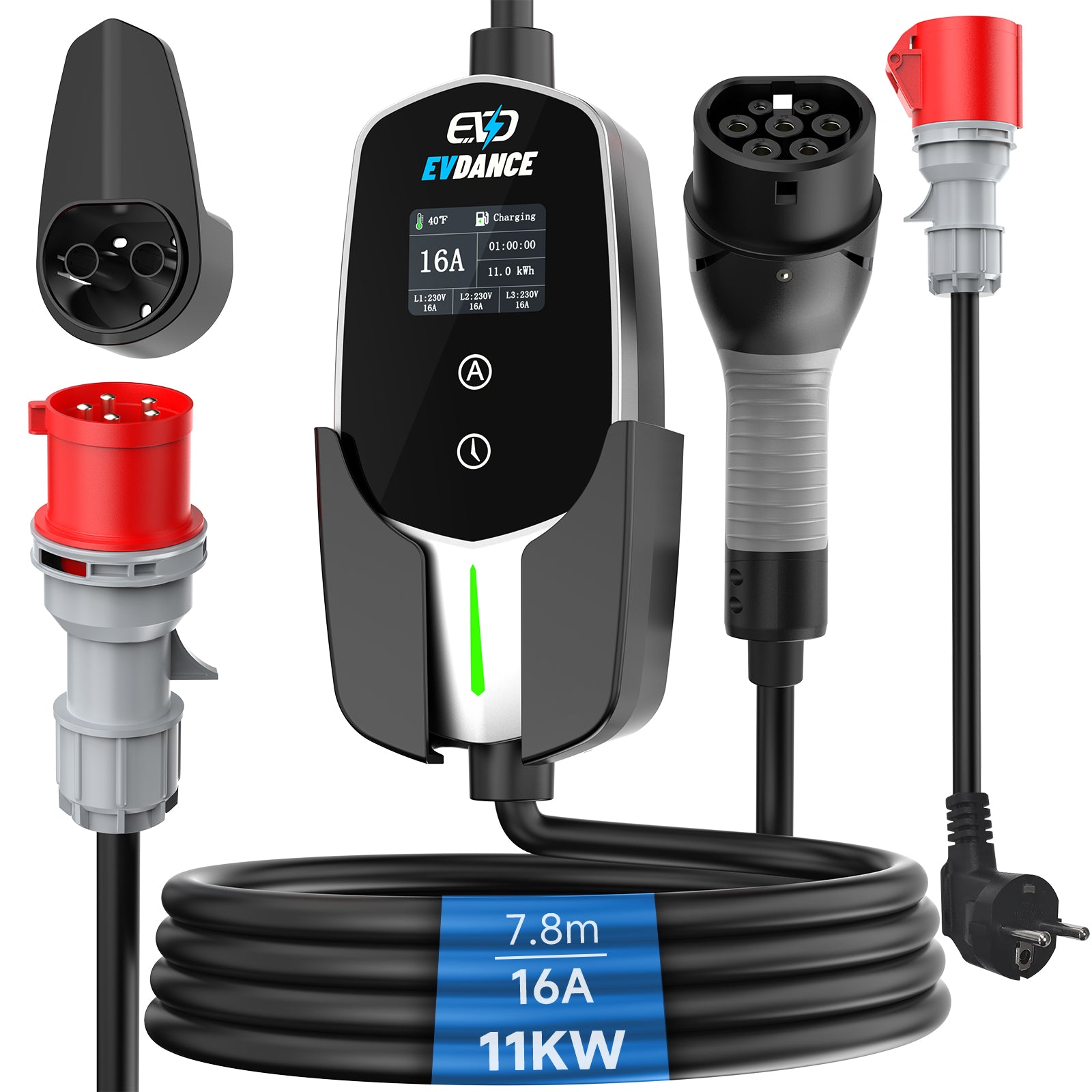
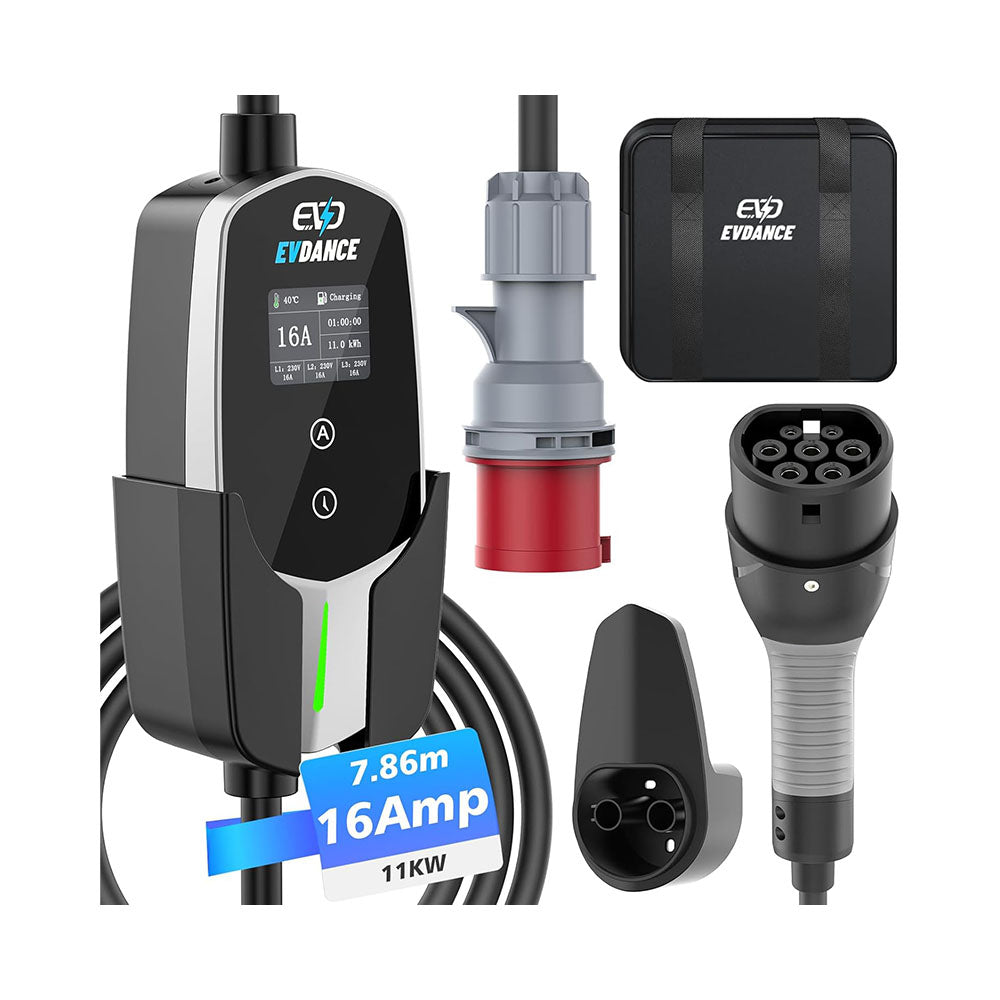
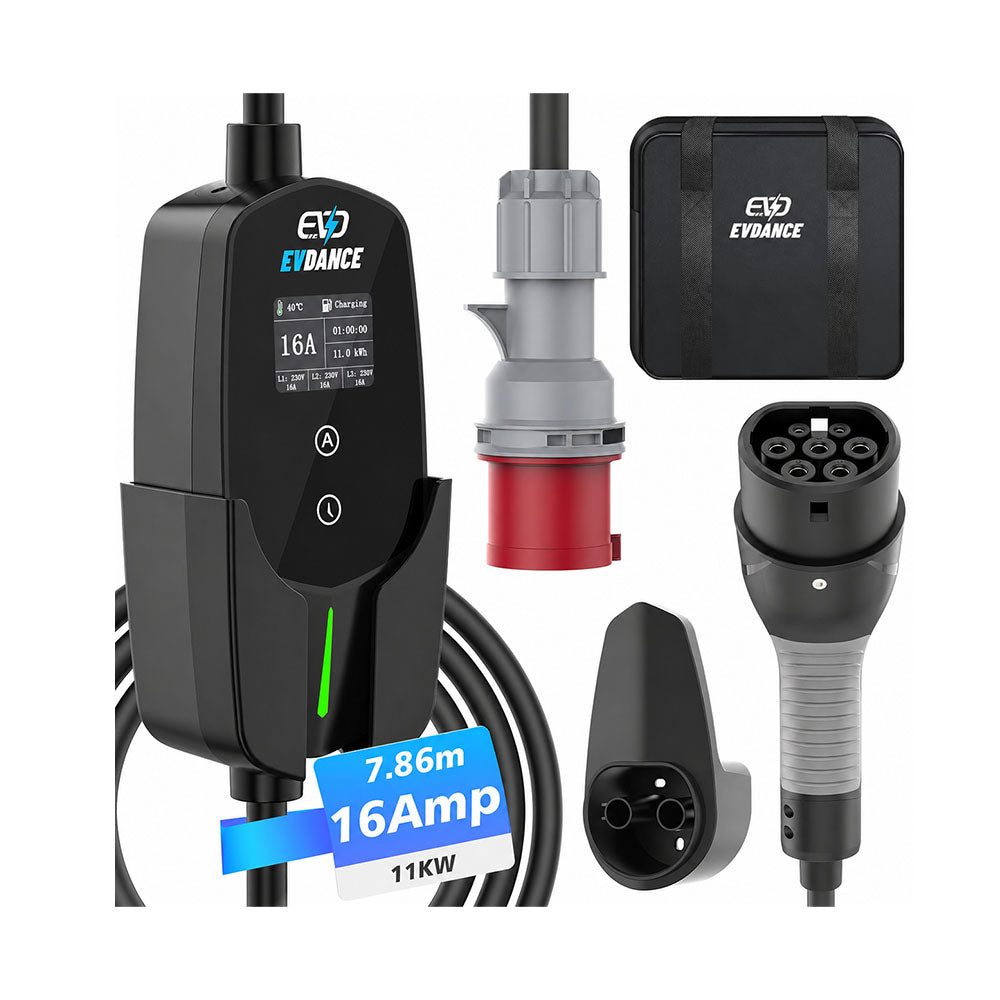
For someone who charges at home during the week but also has a suitable CEE connection at a second residence or private workplace, the EVDANCE 11 kW CEE mobile wallbox can move between those known locations. It supports 6 A to 16 A adjustable current, delayed charging and status monitoring through its display and compatible App.
The integrated Type 2 cable and included holder create a complete setup without requiring a separate charging cable. The charger can provide up to 11 kW when the electrical supply and vehicle’s onboard AC charger both support that output.
Portability does not mean that the charger can be connected to any available socket. The plug type, voltage, current and number of phases must match at every charging location. The differences between the two common connections are explained in Schuko or CEE: Which EV Charger Is the Better Fit?.
Convenient Charging at One Regular Parking Space
When the vehicle returns to the same garage or driveway each day, keeping a wallbox mounted near the parking space can reduce daily handling. The charger remains ready for use, and the cable can be stored on a holder rather than transported in the vehicle.
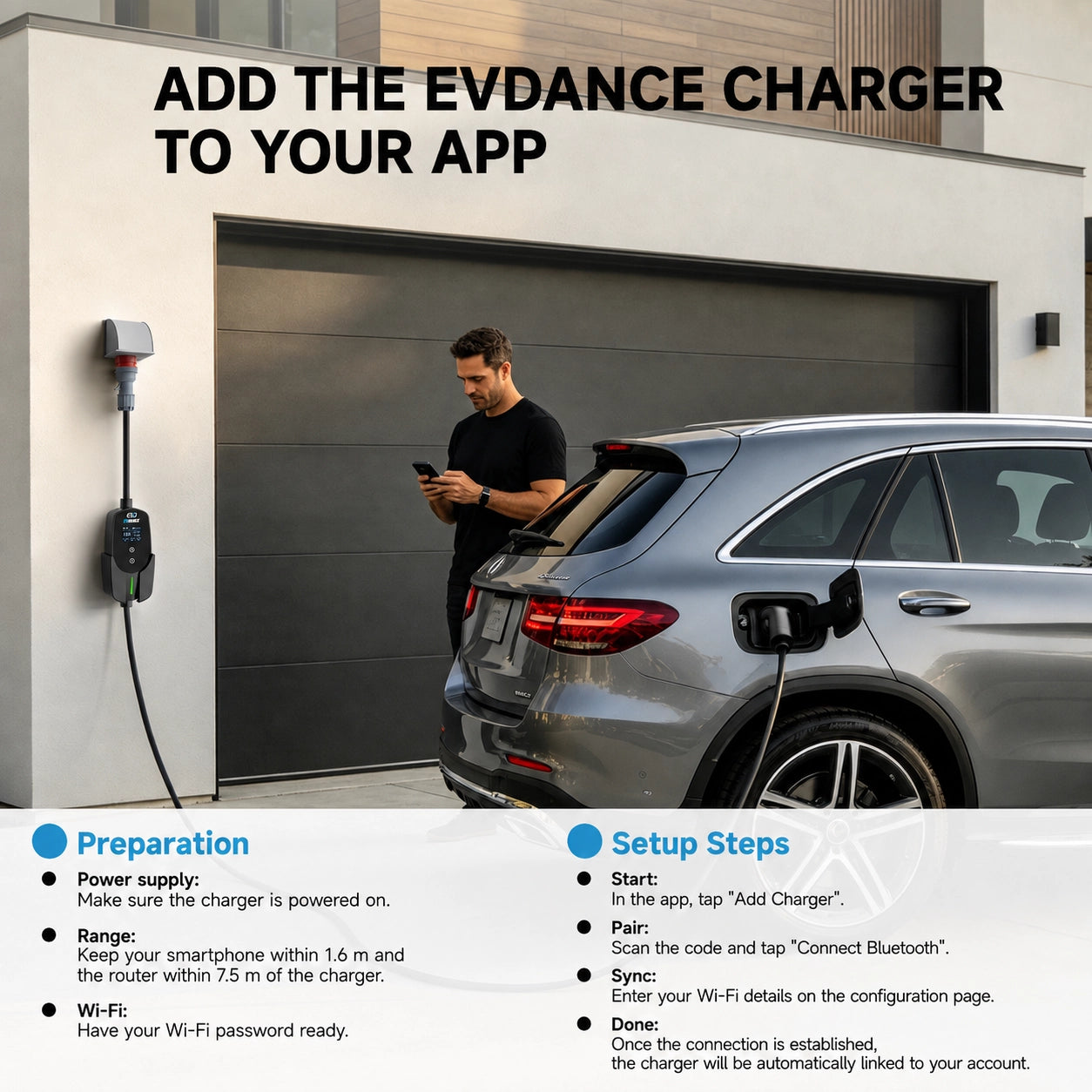
The EVDANCE 11 kW wallbox with CEE plug, App and RFID is designed for a compatible 400 V three-phase CEE connection. It provides up to 11 kW, adjustable current from 6 A to 16 A, scheduled charging and connected monitoring. RFID access can also be useful when the charging point is accessible to more than one driver.
This arrangement combines a regular wall-mounted position with a CEE power connection. It is therefore different from a hardwired wallbox, even though the unit can remain beside the same parking space for everyday charging.
A permanent charging position also makes it easier to plan the cable route around the vehicle’s charging-port location and usual parking direction. The wallbox and cable holder can be positioned so that the cable reaches naturally without being stretched across the garage or driveway.
For a broader comparison of permanent and transportable setups, read Mobile Wallbox or Fixed Wallbox: Which Solution Fits Better?.
Three Things to Check Before the Black Friday Sale
Start with the available power connection. Check whether the intended charging location provides Schuko or a compatible CEE socket. If new electrical work is required, the complete charging circuit and protection requirements should be assessed by a qualified electrician.
Check the vehicle’s maximum AC charging power. An 11 kW charger is most useful when the vehicle supports three-phase 11 kW AC charging. A vehicle with a lower onboard AC limit can still charge from a compatible unit, but it will not use the charger’s full available output.
Measure the actual cable route. Consider the vehicle’s charging-port position, parking direction and distance from the power connection. The cable should reach comfortably without being pulled tight or routed through a main walking area.
These checks should come before comparing sale prices. A larger discount does not compensate for the wrong plug, an unsuitable electrical connection or an inconvenient cable route.
Buy for the Home Setup, Not Only the Discount
A Schuko portable charger is the most flexible of these options for backup and occasional charging where no dedicated connection is available. An 11 kW CEE mobile wallbox fits households that already have a suitable three-phase socket and may use the charger at several regular locations.
For a vehicle charged at the same parking space each day, a wall-mounted 11 kW wallbox with a CEE plug provides a more organised everyday setup with App monitoring, scheduling and RFID access.
Black Friday is most useful when it reduces the cost of equipment that already fits the home, vehicle and charging routine. Confirm those requirements first, then compare the current offer and availability before ordering.
Recommend Reading: Schuko or CEE: Which EV Charger Is the Better Fit?






Share:
EVDANCE vs EM2GO: Which 11 kW Mobile Wallbox Fits Better?
EVDANCE vs Green Cell Habu SE: Which 11 kW Charger Fits Better?