

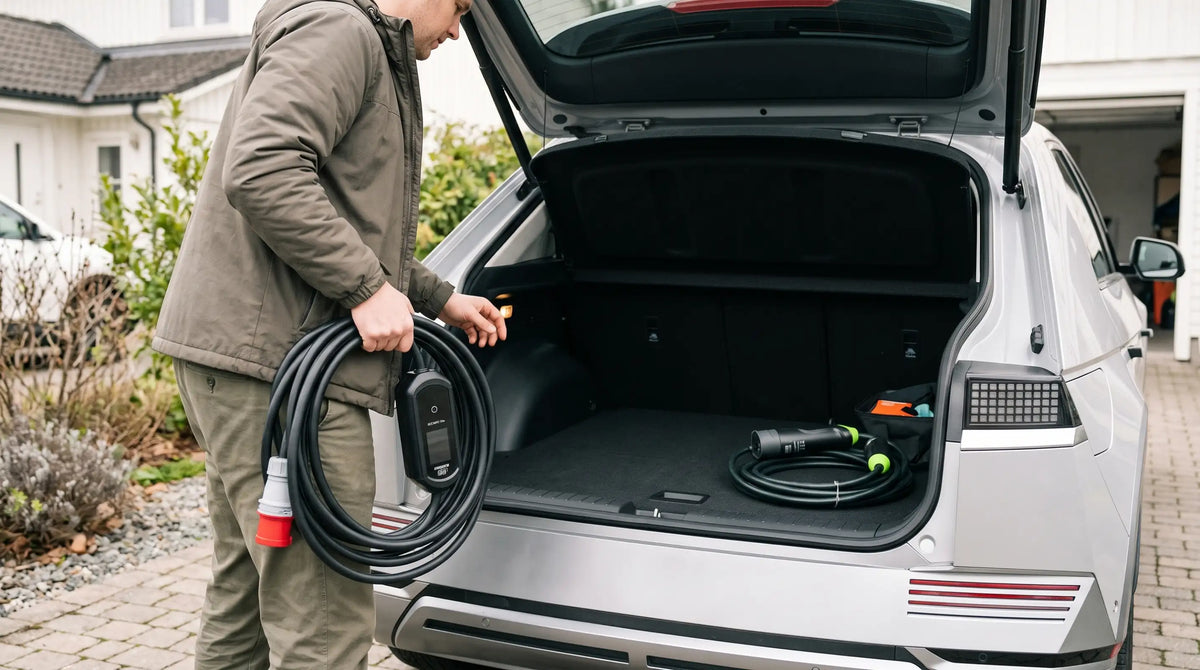
The EVDANCE 11 kW CEE Mobile Wallbox offers a longer cable, a separate control interface and a three-year warranty. The Green Cell Habu SE uses a slimmer design that integrates the charging electronics and LCD screen into the connectors.
Both products connect to a compatible 400 V three-phase CEE 16A socket and provide up to 11 kW through a Type 2 connector. The decision therefore depends less on charging speed and more on product design, cable reach, control position and everyday handling.
The Same 11 kW Charging Foundation
The two products are portable alternatives to a permanently installed wallbox. They can be used at home, at a private workplace or at another known location with the correct CEE connection.
Both support adjustable current between 6 A and 16 A. To receive the full 11 kW, the vehicle must also support three-phase 11 kW AC charging. A vehicle with a lower onboard AC limit will charge at the lower supported level with either product.
Neither charger has an automatic speed advantage under the same conditions. Their main differences are found in how the charging electronics, screen and cable are arranged.
EVDANCE and Green Cell Habu SE Compared
| Feature | EVDANCE 11 kW CEE Mobile Wallbox | Green Cell Habu SE |
|---|---|---|
| Maximum output | 11 kW | 11 kW |
| Power connection | 400 V, three-phase CEE 16A | 400 V, three-phase CEE 16A |
| Vehicle connector | Type 2 | Type 2 |
| Current adjustment | 6–16 A | 6–16 A, three-stage adjustment |
| Cable length | 7.86 m | 7 m |
| Main design | Separate cable-mounted control box | Electronics integrated into the connectors |
| Display position | On the control box | On the vehicle-side connector |
| Published ingress protection | IP66 for the control box | IP55 |
| Warranty | 3 years | 24 months |
Specifications, availability and supplied accessories may change. Check the current product pages before ordering.

Conventional Control Box or Integrated Connector Design
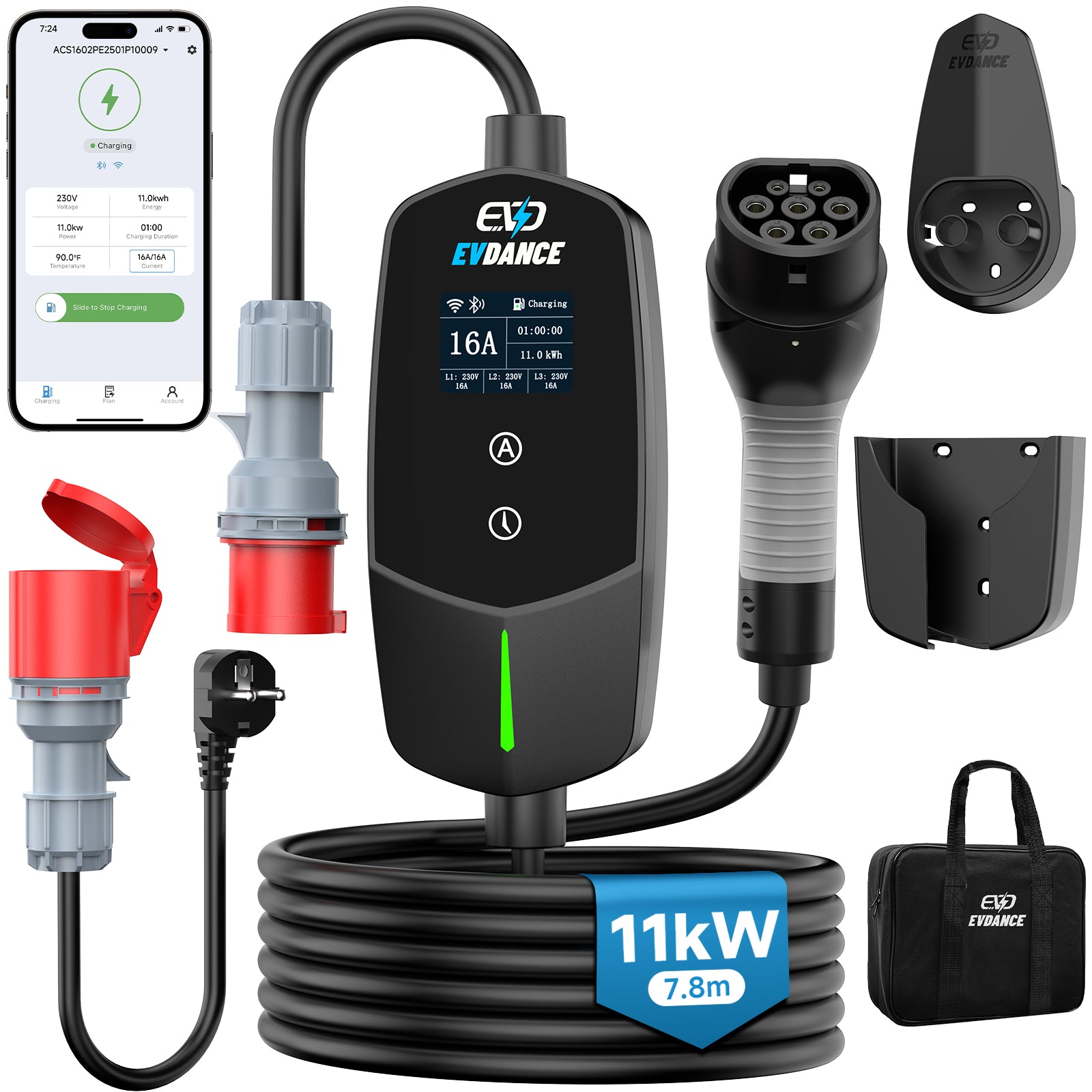
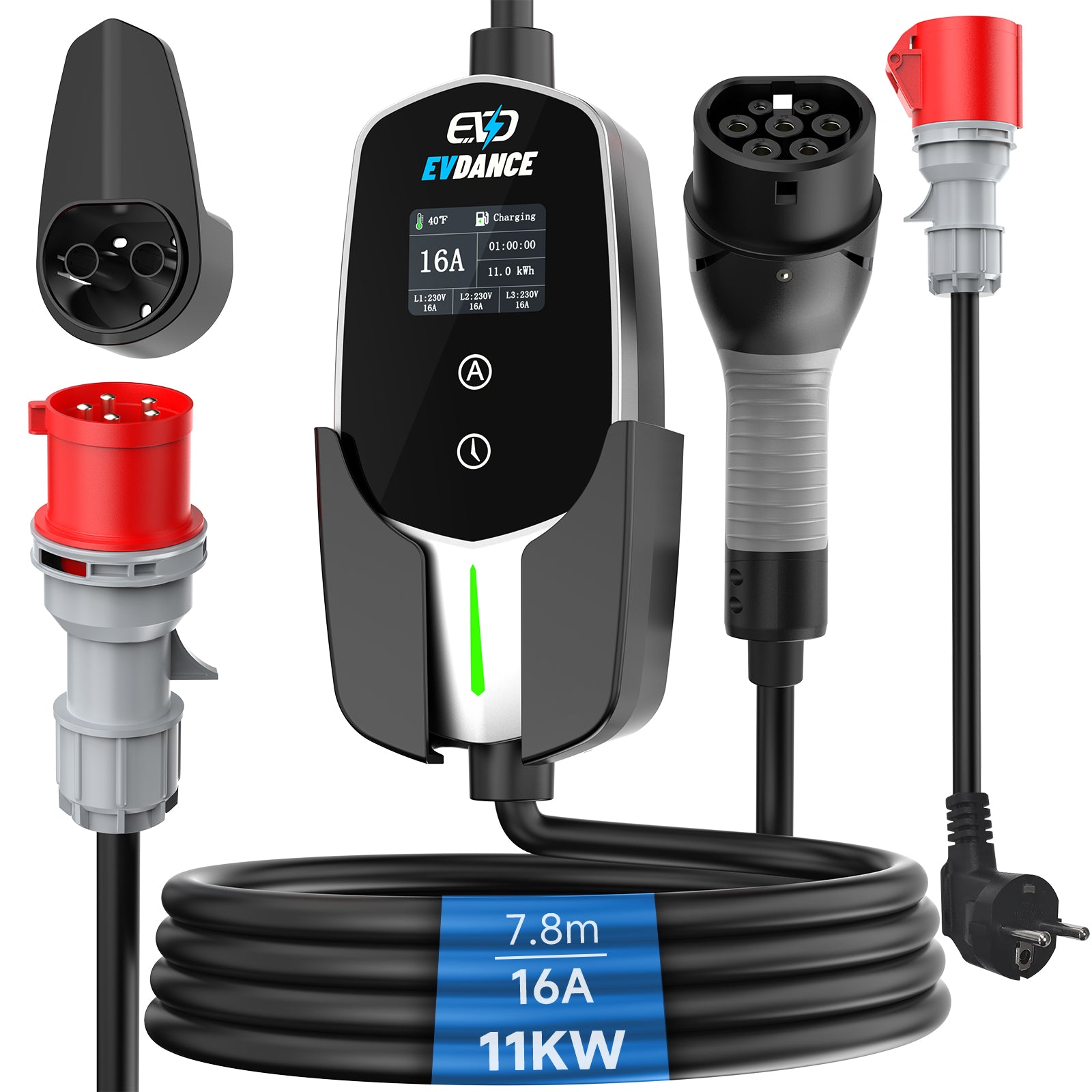
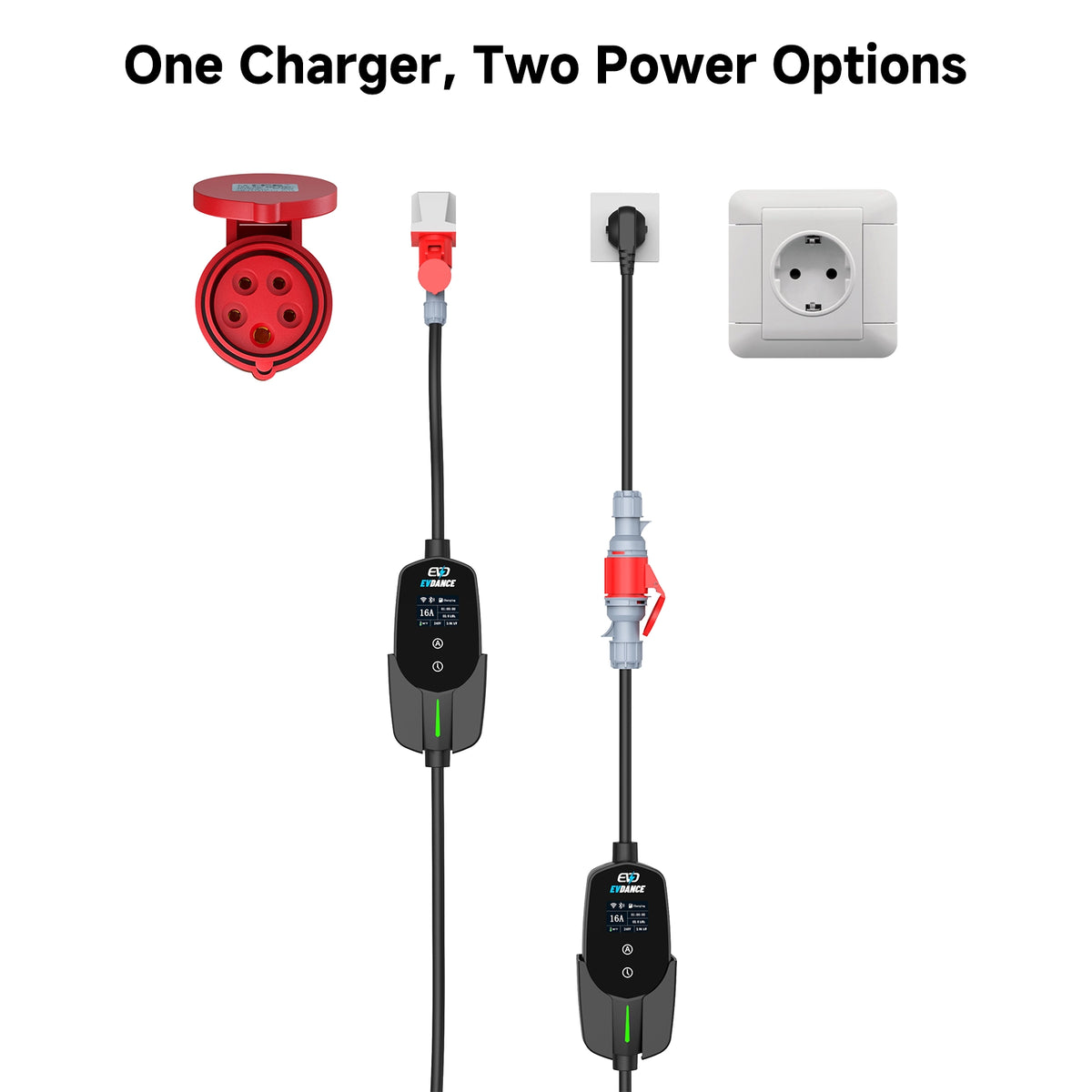
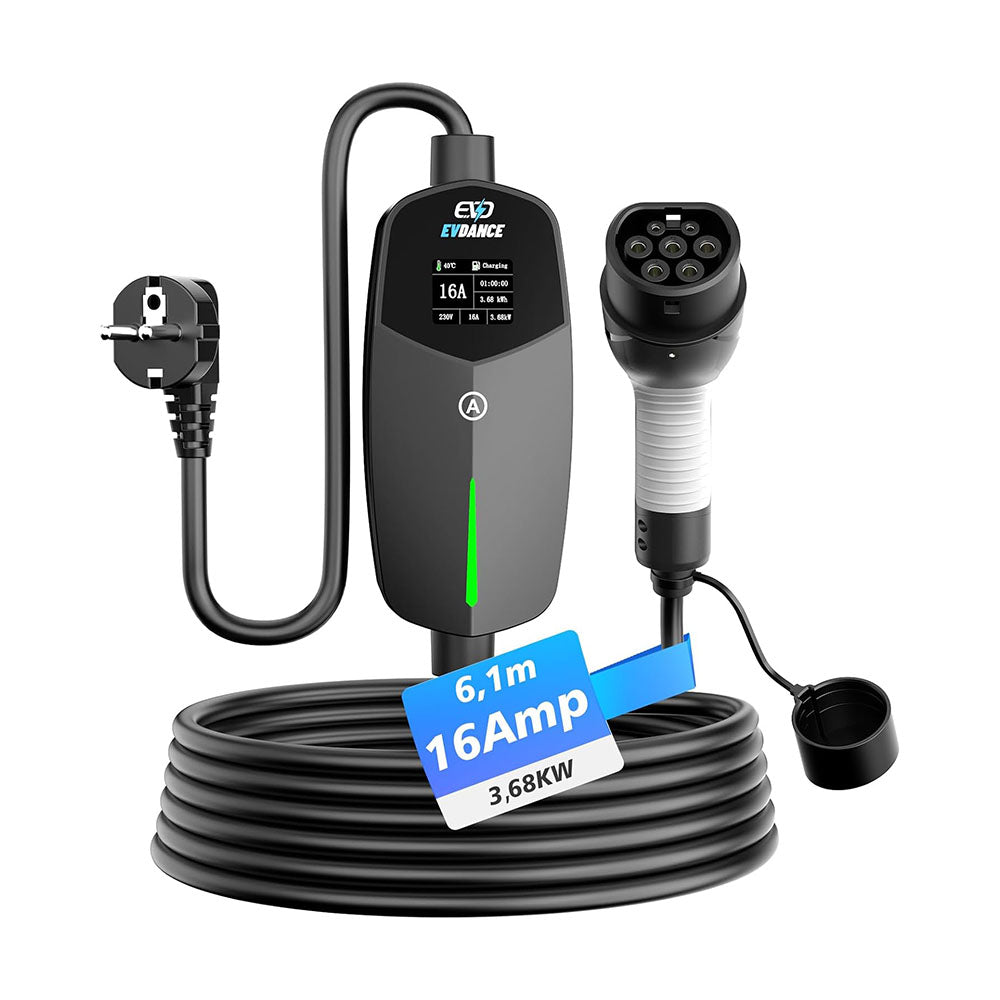
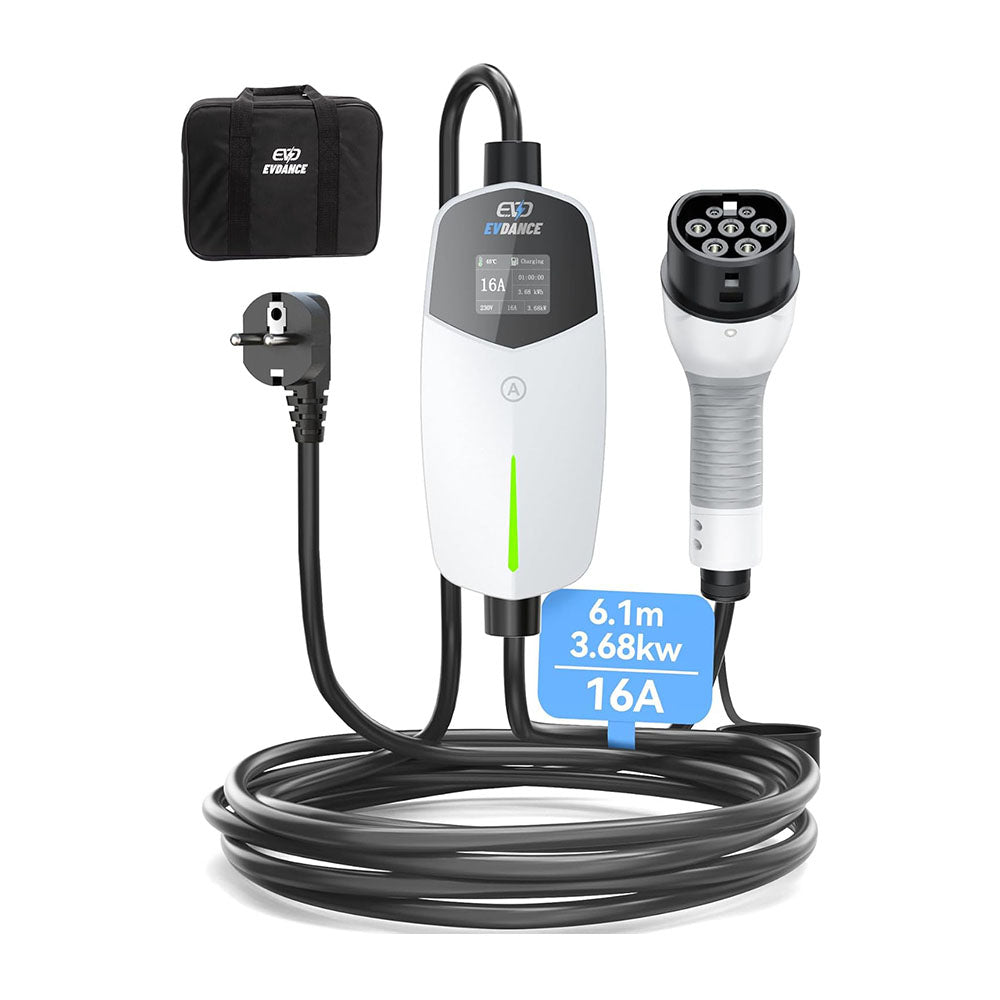
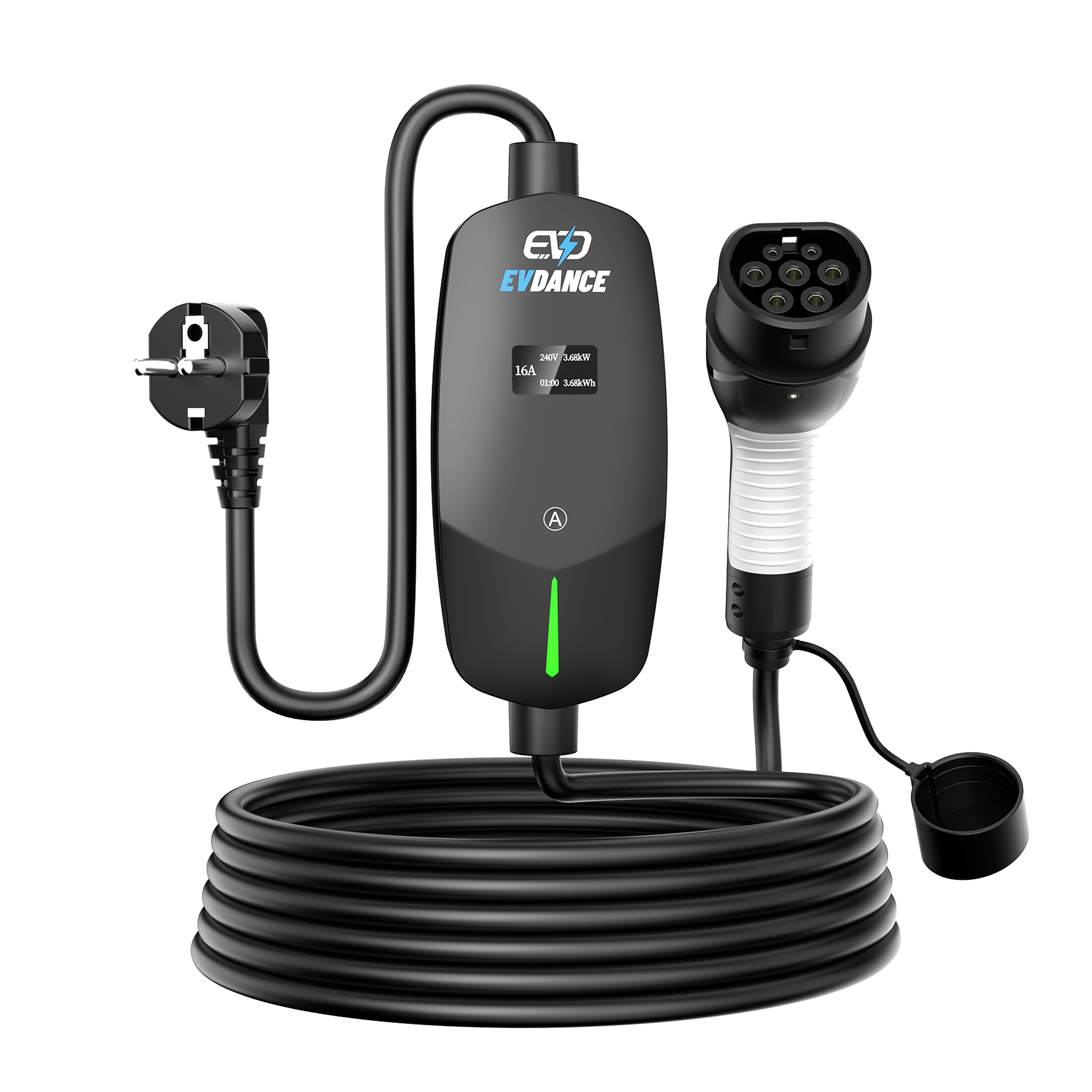
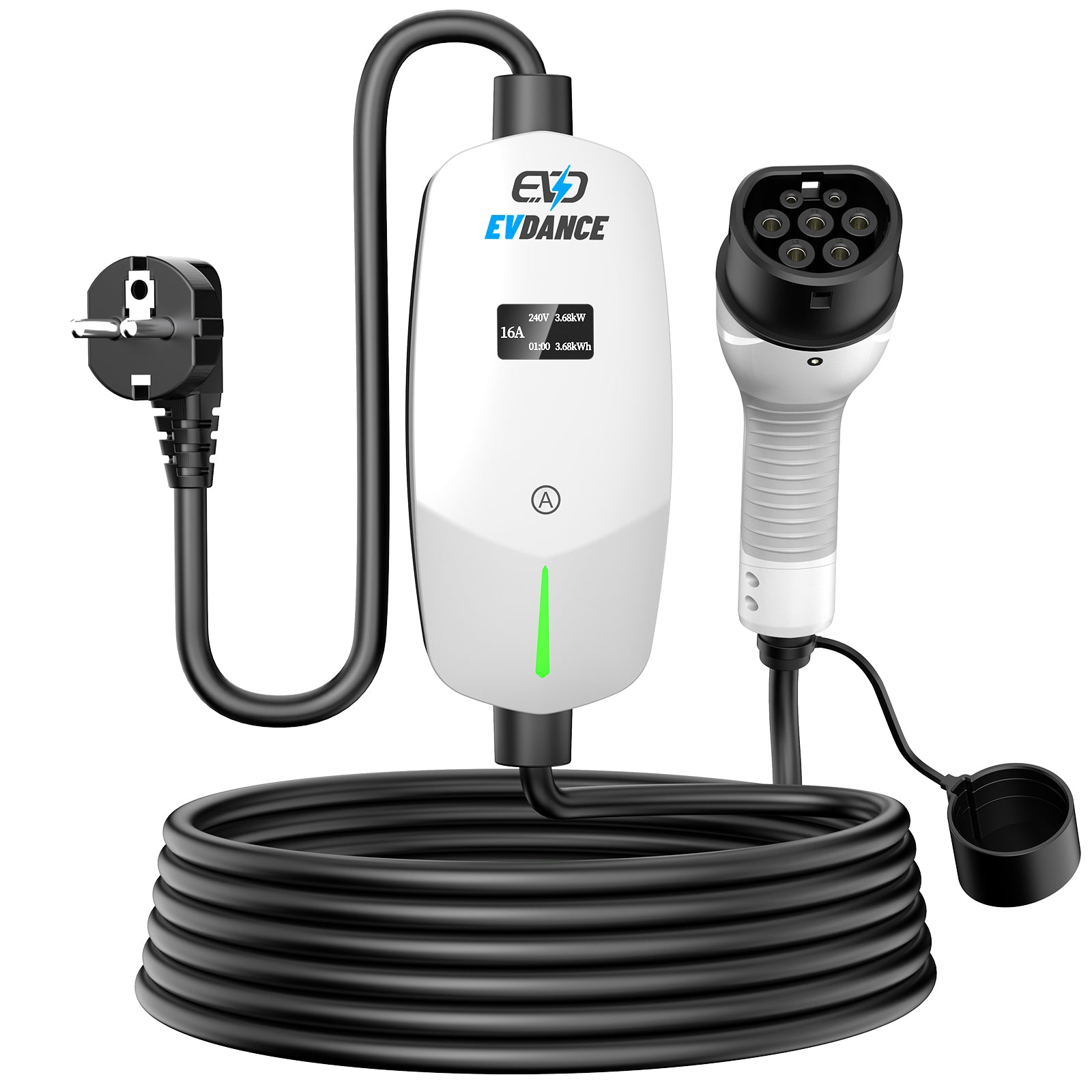
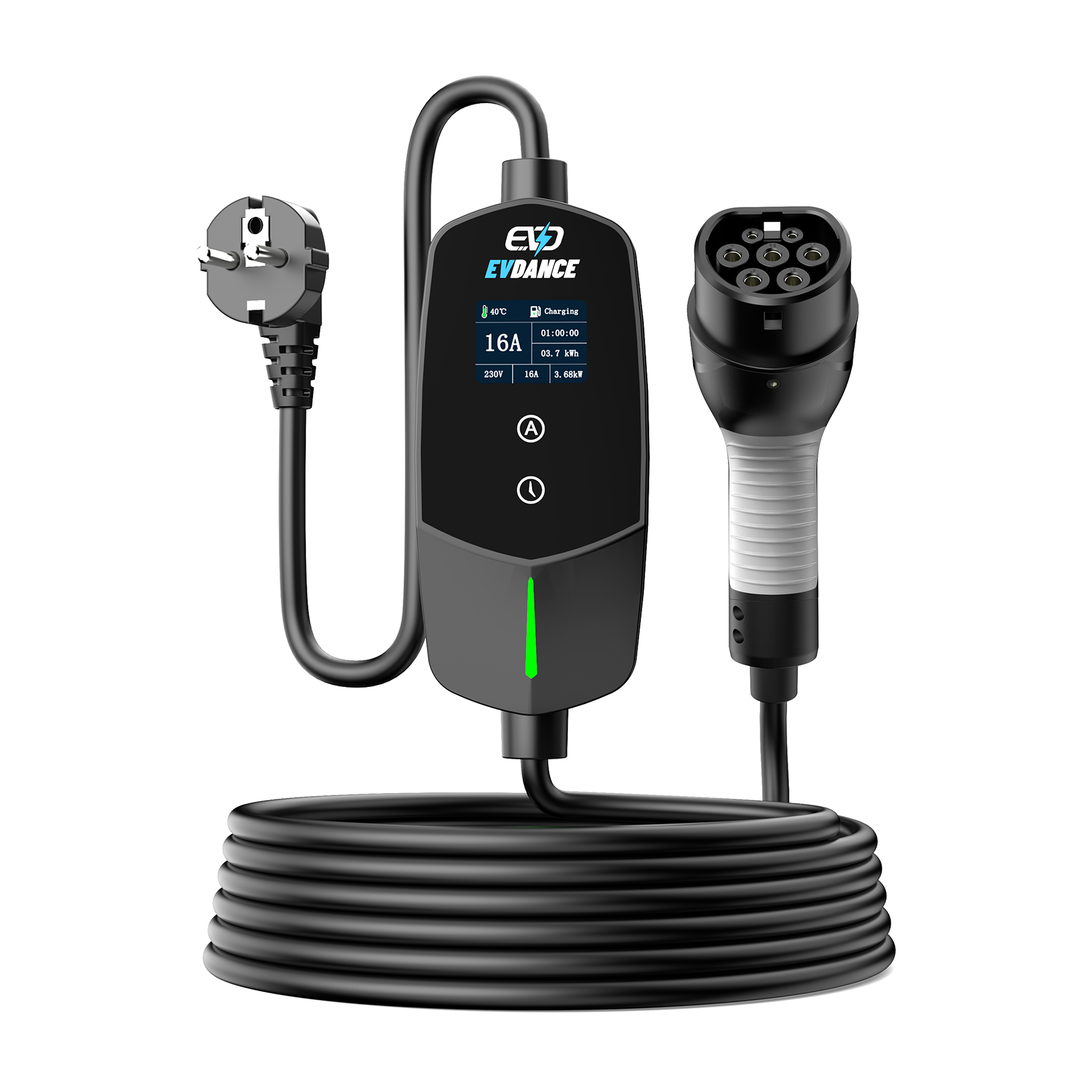
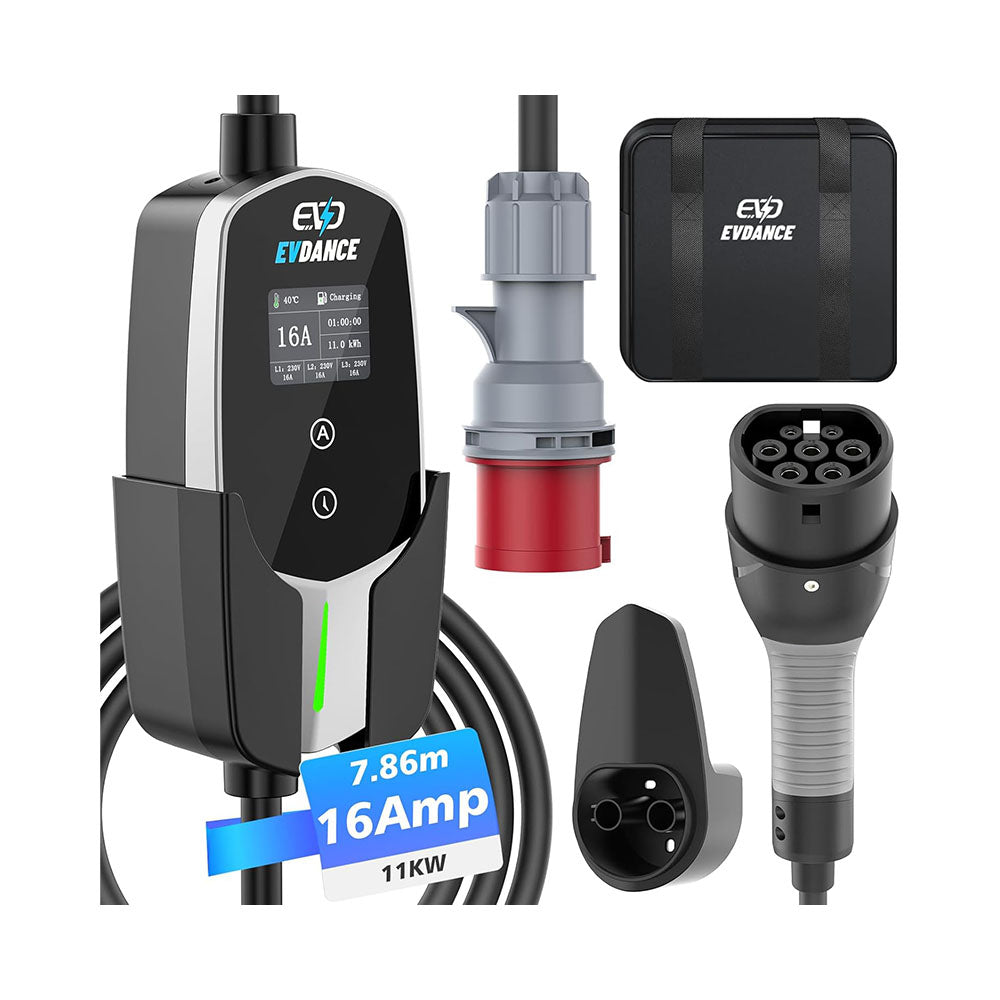
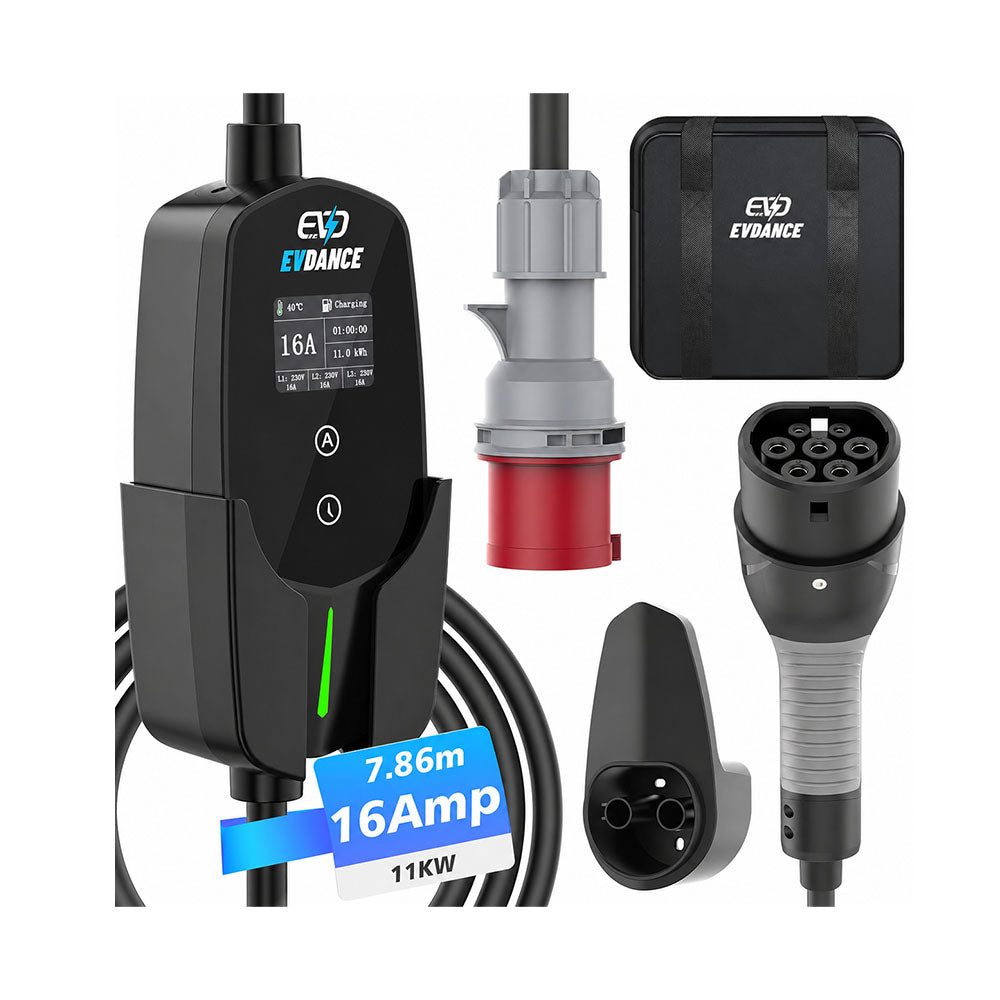
The EVDANCE 11 kW CEE Mobile Wallbox follows a conventional portable-charger layout. A separate control box is positioned between the CEE plug and Type 2 connector, providing a dedicated location for charging controls and status information.
Its 7.86 m cable provides slightly more reach than the 7 m Green Cell model. The additional length may help when the CEE socket is positioned farther from the vehicle or when the charging port faces away from the power connection. A carrying case is also included for storage in the vehicle, garage or workshop.
The Green Cell Habu SE removes the separate control box. Its charging electronics are integrated into the plugs, producing a slimmer cable layout without a large module in the middle.
This design can be easier to handle when a compact cable is the main priority. However, the location of the controls is also different, which may affect which product feels more convenient in daily use.
Display and Charging Controls
EVDANCE places its information display on the separate control box. Drivers can view real-time charging information, adjust the available current and set the 1–12 hour delay timer directly on the charger.
Habu SE places its LCD screen on the vehicle-side connector. Its push-button control, haptic feedback and built-in LED keep the main controls close to the point where the driver connects the vehicle.
The main difference is the position and physical design of the controls. EVDANCE provides a dedicated control-box interface, while Habu SE integrates its screen and controls into the connector.
Neither arrangement is automatically better. A control box may be easier to read when supported on a wall holder or shelf, while a connector-mounted screen keeps information close to the vehicle charging port.
Cable Reach, Protection and Warranty
The difference between 7.86 m and 7 m is not large, but it can matter in a garage or driveway with a fixed CEE socket. The required cable route should be measured rather than estimated in a straight line.
EVDANCE publishes an IP66 rating for the control box. Green Cell lists Habu SE with an IP55 rating. These ratings apply to the scope stated by each manufacturer and should not be treated as a complete comparison of every plug and connector.
Both chargers should still be used according to their instructions, with the CEE connection kept in suitable condition and protected from avoidable damage or standing water.
EVDANCE provides a three-year warranty, while Green Cell lists a 24-month warranty for Habu SE. Warranty length may be relevant for a charger that will be used regularly at home and transported between locations.
Which 11 kW Mobile Charger Fits Better?
EVDANCE is likely to fit better when a longer cable, a separate control interface and a longer warranty are the priorities. Its delay timer may also be useful when charging should begin later without relying on a separate vehicle schedule.
Green Cell Habu SE may suit drivers who prefer a slimmer cable without a central control box. Its connector-mounted LCD, push-button control, haptic feedback and built-in LED create a more integrated operating experience.
Both chargers provide the same maximum 11 kW output from a compatible CEE 16A three-phase connection. The practical choice is between EVDANCE’s conventional control-box layout and longer cable, or Habu SE’s compact connector-based design.
Recommend Reading: EVDANCE vs EM2GO: Which 11 kW Mobile Wallbox Fits Better?






Share:
Best Home EV Chargers for Black Friday 2026
Wallbox Cable Too Short? How to Choose the Right Solution