4 products

4.6
Save 14%
Type F
Type F

Socket

16A/230V
16A/230V

Circuit

Type 2
Type 2

Connector

20 FT
20 FT

Cable

4.7
Save 11%
18 FT
18 FT

Cable

16A/400V
16A/400V

Circuit

Type 2
Type 2

Connector

CEE 5 Pin
CEE 5 Pin

Socket

4.9
Save 11%

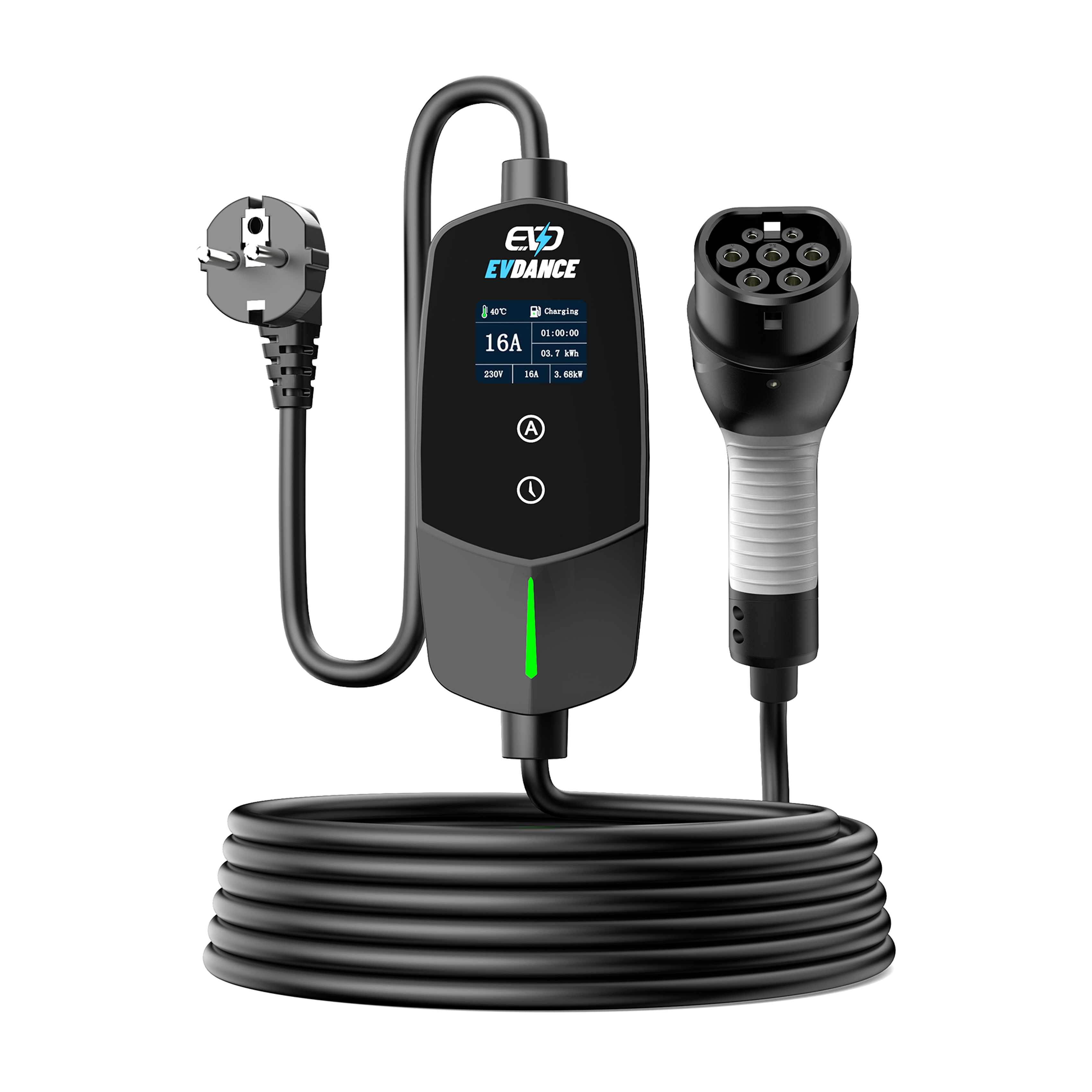
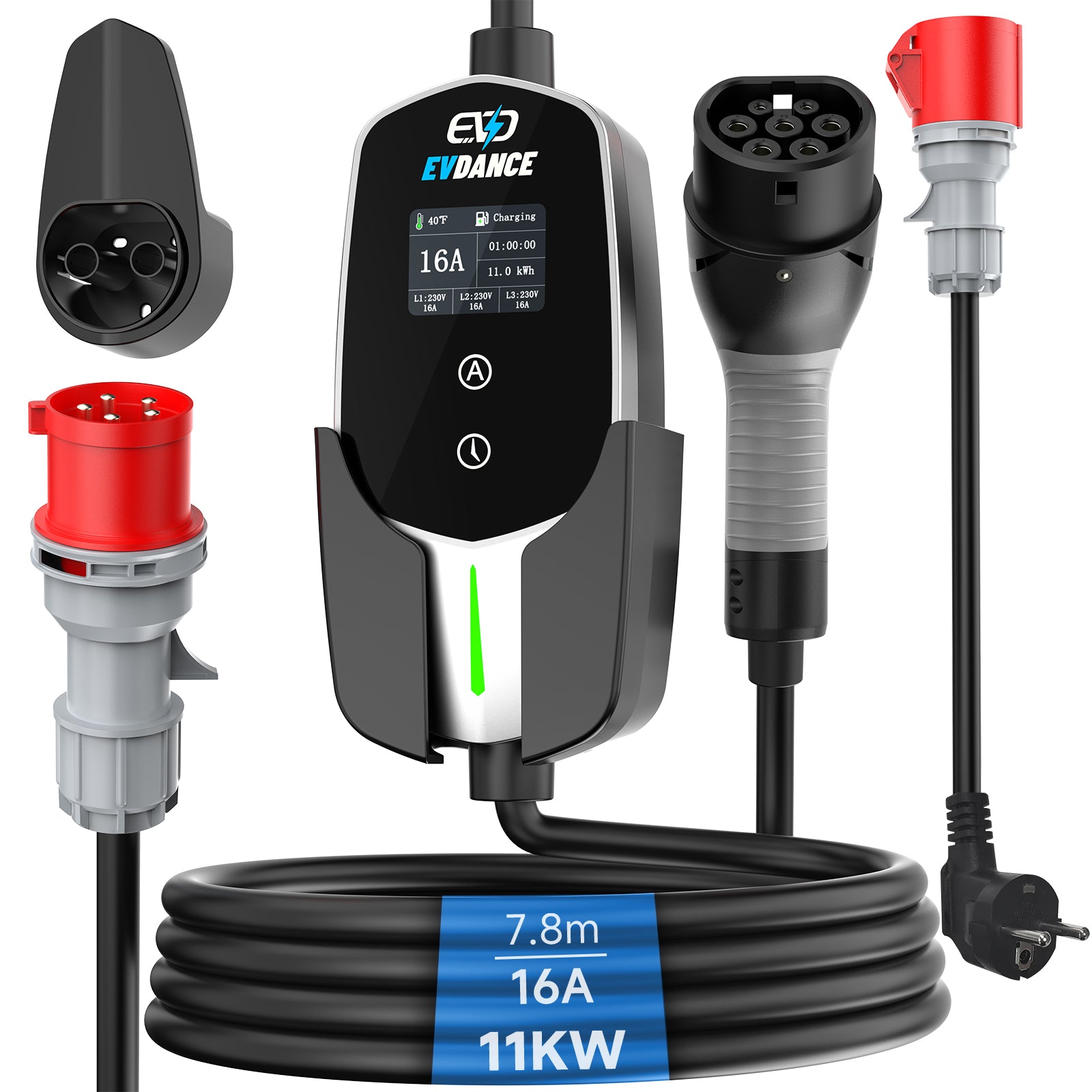
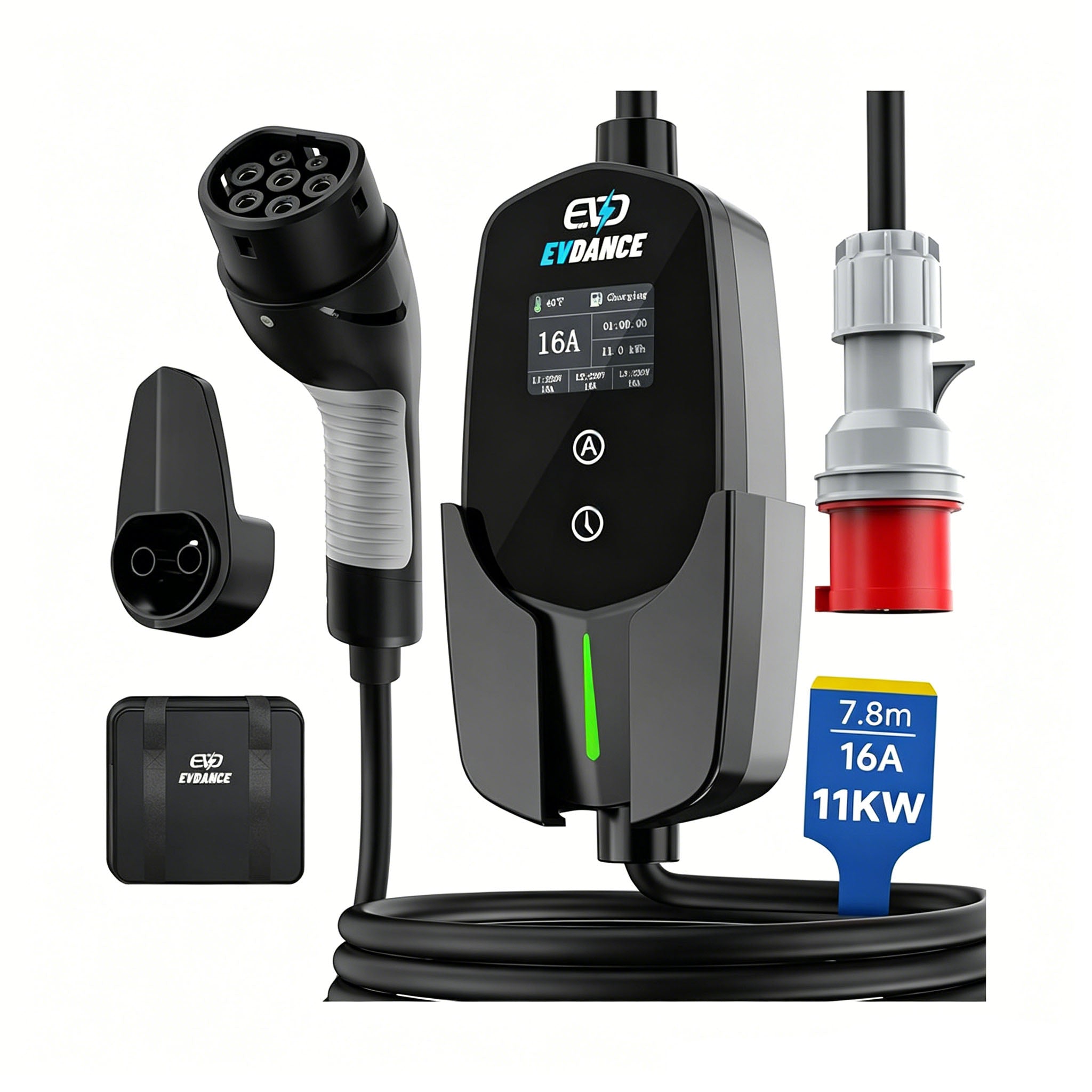
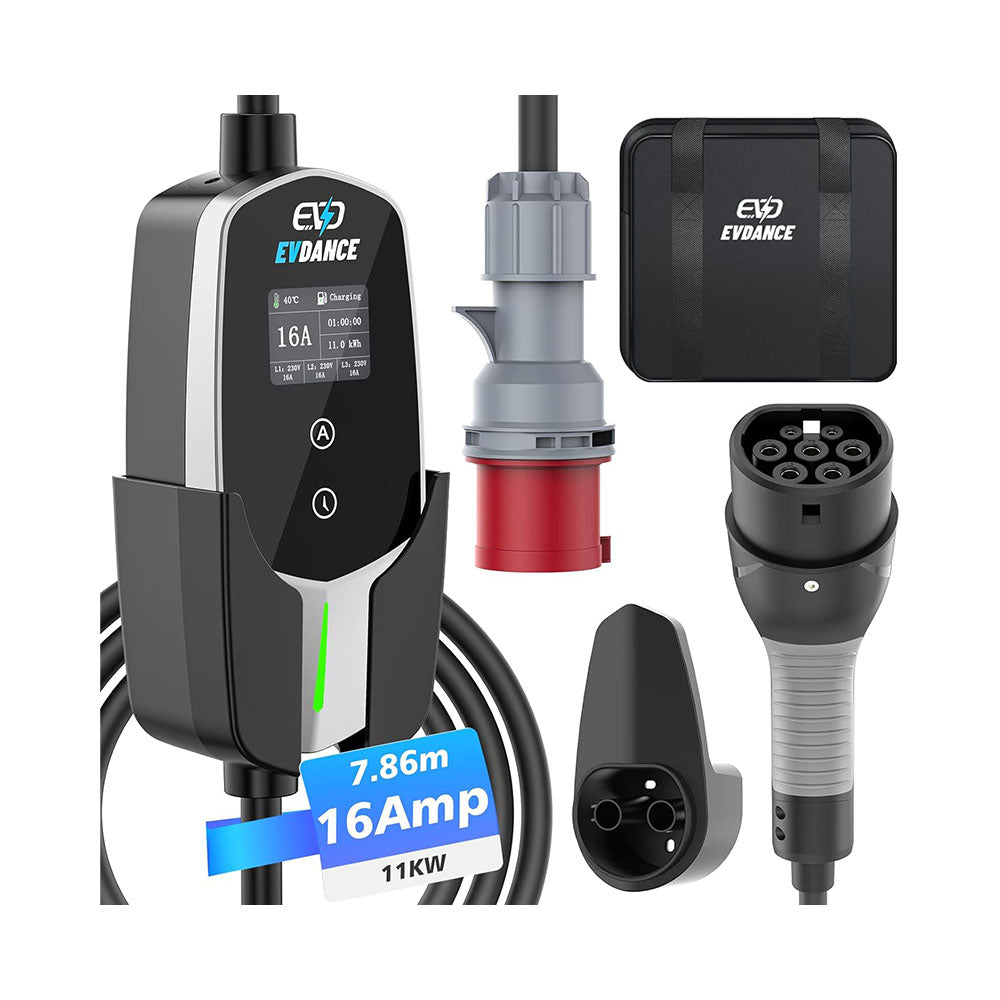
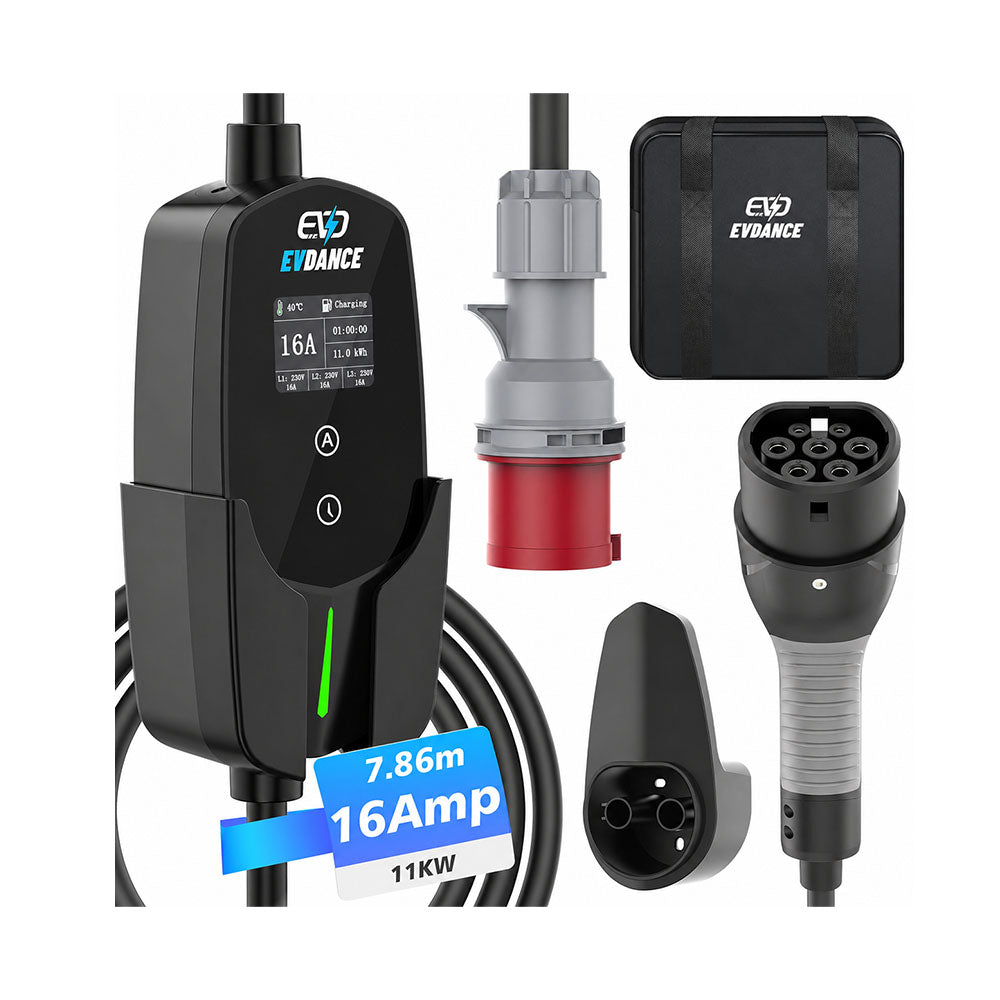
EVDANCE 11 (kW) Mobile Wallbox, 3 Phase Type 2 EV Charger 16A Max, CEE Plug

Sale price€201,95 EURRegular price €227,99 EUR
25 FT
25 FT

Cable

CEE 5 Pin
CEE 5 Pin

Socket

16A/400V
16A/400V

Circuit

Type 2
Type 2

Connector

4.8
Save 11%

EVDANCE Single Phase Type 2 EV Charger 10A Max, 2.3 (kW), 3 Pin Plug, Advanced

Sale priceFrom €152,95 EURRegular price €170,95 EUR
20 FT
20 FT

Cable

10A/230V
10A/230V

Circuit

Type G
Type G

Socket

Type 2
Type 2

Connector

Why EVDANCE

Built for Daily Charging

  • Up to 32A / 22 kWAdds ~37–44 miles of range per hour for most EVs
  • CEE / UKCA / FCC CertifiedEligible for federal & state rebates
  • 18-26 ft Charging Cable OptionReach from garage corner to driveway
  • IP66 Weatherproof & DustproffMount outdoors with confidence
  • Manual+ EVDANCE AppSchedule off-peak, track kWh & cost
  • 2-year warrantyStandard — extendable to 10 years

FAQs

Find the answers about portable EV Charger questions.

What charging power do I need – single-phase or three-phase?

In Europe and UK, both single‑phase (230V) and three‑phase (400V) connections are common. Three‑phase chargers (e.g. 11 kW or 22 kW) enable much shorter charging times, provided your household connection and your vehicle support it.

Is my electric car compatible with a Type 2 charger?

Most electric vehicles approved in Europe and UK are equipped with a Type 2 port. Please check your vehicle’s technical specifications to ensure full compatibility.

Do I need an electrician for installation?

For fixed wallbox chargers (11kW / 22kW) in UK and mainland Europe, you must hire a qualified certified electrician for installation. A dedicated circuit, independent wiring, residual current protection and compliant earthing are required. DIY installation is legally not permitted. Unauthorised self-installation will void the product warranty and pose serious electrical safety hazards.


For portable EV chargers in UK and Europe, If you simply plug the charger into an existing compliant household socket (Type G socket in the UK, Schuko socket or CEE industrial socket in Europe), no electrician is required.
If you need to install a new dedicated socket or run new dedicated wiring for a portable charger, you must still hire a professional electrician for the work.


Can I use my charger with a standard household Schuko or Type G socket ?

Yes, you can plug your portable EV charger into a standard Schuko socket (Europe) or Type G socket (UK) for emergency and occasional charging. However, charging via domestic household sockets is relatively slow, with power usually limited to 2.3–3.7 kW.For daily regular charging, we recommend using a CEE industrial plug or a three‑phase 11 kW / 22 kW wallbox solution for faster charging.

Are there any subsidy schemes for private home wallboxes in my country?

Both UK and mainland European countries offer various government or regional subsidy schemes and grants for the installation of private home EV wallboxes.
The exact eligibility rules, subsidy amounts and application terms differ by country and region, and these schemes are often updated or adjusted over time. We recommend checking with your local official energy authority or municipal council for the latest available subsidy programmes in your area.

Is the charger suitable for outdoor use?

Our chargers are designed for outdoor use and feature appropriate protection ratings such as IP66. Even so, installation should be sheltered from direct exposure to the elements to maximise service life

How do I maintain my Type 2 charger for long-term use?

To ensure durability, install your Type 2 EV charger in a sheltered or weather-resistant area, regularly inspect cables for wear, keep the connector clean, and follow the manufacturer’s maintenance guidelines. Many chargers are designed for 10+ years of service

Not Found Your Qustions?

Go to our FAQs for more answers!

Didn’t find your answer?

Don't hestitate to contact us

Buying Guide

How to Choose Your EV Charger

1. Check your EV's connector

This portable EV charger is fully compatible with Type 2 and CCS Combo 2 ports, the mainstream charging connectors for nearly all EV models sold across UK and European countries. Please confirm your car’s inlet matches Type2 / CCS2 before plugging in for charging.
.

2. Pick your install type — plug-in

Choose the plug-in installation for quick setup: simply insert the charger’s mains plug into standard UK/EU household Schuko socket, no fixed wiring required. It works as a portable charger for daily home or roadside emergency charging, easy to store and carry anywhere.

3. Match amperage to your circuit

Adjust output current from 6A to 32A to match your household socket’s rated amperage. Never select a higher current than your wall outlet can support; matching the correct amperage prevents circuit overload, overheating and potential damage for safe UK & EU home charging.

4. Indoor or outdoor mount?

Designed for flexible indoor & outdoor use thanks to IP66 waterproof rating. Use the included wall bracket to fix the charger on garage, courtyard or exterior wall for permanent fixed charging, or keep it unplugged as a portable unit to carry for outdoor roadside emergency charging.

Blog posts

Kann man ein Elektroauto an der Haushaltssteckdose laden?

Kann man ein Elektroauto an der Haushaltssteckdose laden?

Das Laden eines Elektroautos über die Haushaltssteckdose ist möglich, aber langsam und weniger effizient. Der Artikel zeigt Ladezeiten, Sicherheitsrisiken und erklärt, wann sich eine Wallbox lohnt.

Read moreabout Kann man ein Elektroauto an der Haushaltssteckdose laden?

Elektroautos wachsen stark: März 2026 bringt deutlichen Zuwachs

Elektroautos wachsen stark: März 2026 bringt deutlichen Zuwachs

Im März 2026 steigen die Neuzulassungen von Elektroautos in Deutschland deutlich. BEVs erreichen 24 Prozent Marktanteil, während auch Plug-in-Hybride weiter wachsen und den Wandel vorantreiben.

Read moreabout Elektroautos wachsen stark: März 2026 bringt deutlichen Zuwachs

Denza startet 2026 in Europa: BYD setzt auf Premiumstrategie

Denza startet 2026 in Europa: BYD setzt auf Premiumstrategie

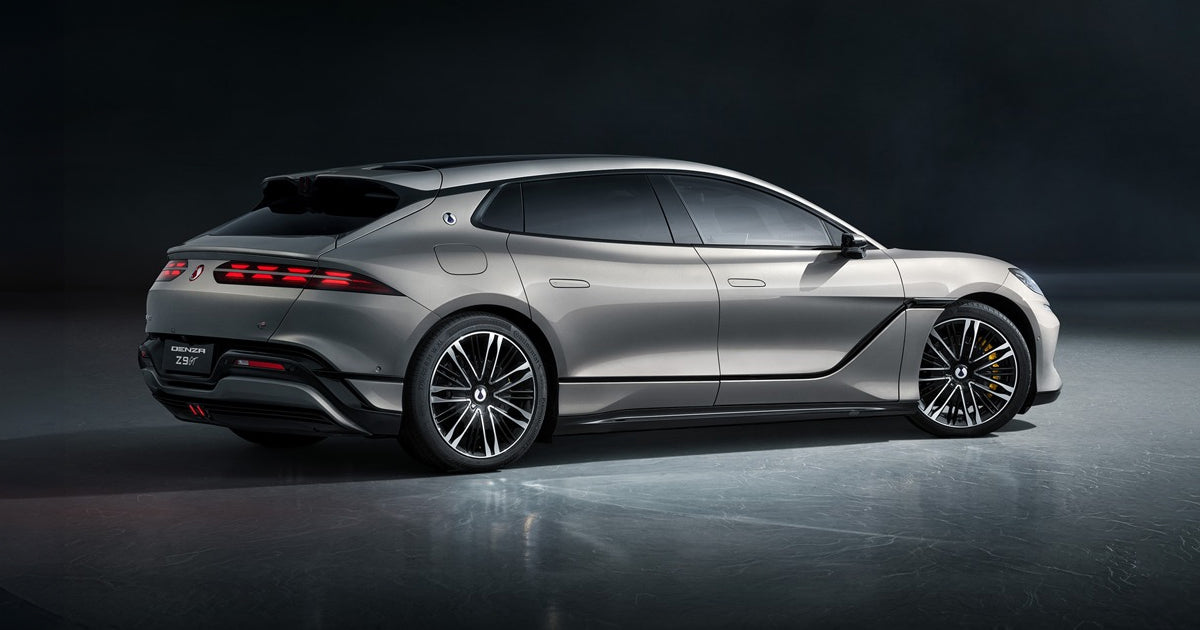
BYD plant den Europa-Start seiner Premiummarke Denza im Jahr 2026. Mit Daniel Craig als Markenbotschafter und neuen Modellen wie dem Z9GT soll die Position im Premiumsegment gestärkt werden.

Read moreabout Denza startet 2026 in Europa: BYD setzt auf Premiumstrategie